
Article: Why Has My Mānuka Honey Crystallised? A Guide to Honey Texture
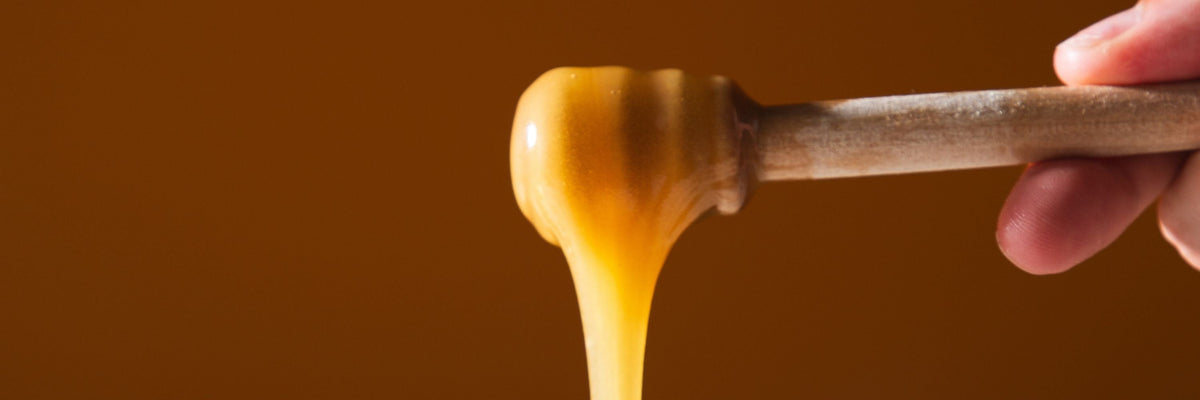
Why Has My Mānuka Honey Crystallised? A Guide to Honey Texture
Opened a jar of honey to find it thick, grainy or set almost solid? Don't worry, and definitely don't throw it away. Crystallisation is one of the most natural things honey can do. In fact, it's often a sign you've got the real thing.
Here's why it happens, how to bring your honey back to a silky texture if you prefer it that way, and how to store it so it stays just how you like it.

Has my honey gone off?
No. It’s a common myth that when honey crystallises, it means it’s ‘gone bad.’ But because of honey’s high sugar content and low water content, honey is one of the few natural products that doesn’t actually expire. In fact, it’s this sugar-to-water ratio that explains its crystallisation. Since it contains more sugar (glucose and fructose) than water, there isn’t enough water to keep these sugar crystals dissolved.
The one thing to watch for is moisture. If water gets into the jar, honey can ferment. So always keep the lid on tight and use a clean, dry spoon.
Why does honey crystallise?
Honey contains far more natural sugar (glucose and fructose) than water. There simply isn't enough water to keep all of that sugar dissolved, so over time some of it forms tiny crystals.
How quickly that happens depends on two things:
- The flowers the bees visited. Every honey has its own natural balance of sugars. Honeys higher in glucose set faster.
- Temperature. Cool conditions speed up crystallisation, which is why honey often sets faster through a British winter.
Nothing is added and nothing is taken away. No syrups, no additives, no preservatives and no artificial sweeteners. Just pure New Zealand honey.
Creamed vs crystallised: what's the difference?
Creamed honey is simply crystallisation, carefully controlled. Left alone, honey forms large, uneven crystals that feel grainy. Creaming encourages lots of tiny, even crystals instead, giving that smooth, spreadable texture you'll find in many of our jars.
Here's how we do it:
- Harvest. Once harvested, all our honey is poured into 200L drums and placed in temperature-controlled storage.
- Filter. The honey is then poured into a ‘tip tank’, which filters out any foreign bodies like tree bark, flower stems and insects. Our honey makers personally oversee and record each batch that comes into the factory
- Fine filter. It’s then sent through a slightly finer filter to catch any other debris (particularly beeswax!) Filtering our honey ensures that it’s perfectly safe for you to eat, without losing any of its health benefits.
- Cream. Creaming’ refers to our cold-processing of raw honey, where it’s slowly and gently turned for 36-48 hours in these tanks to break up the dense, chunky crystals into fine, uniform crystals.
- Pack. The honey is piped into the packing room for bottling, labelling and despatch. That’s all there is to it!
Because our honey is 100% raw and unpasteurised, it crystallises naturally over time, exactly as nature intended.
Why we never pasteurise our honey
When people hear the word ‘processing’, they instantly assume the product is no longer raw. The key thing to remember here is that we don’t add anything to our honey, or take anything away.
Many mass-produced honeys are pasteurised, heated to around 71–85°C and then cooled quickly, which keeps them runny on the shelf for longer. But that heat can reduce the natural enzymes, antioxidants and other compounds that make honey special.
We keep our honey at low temperatures from hive to jar to protect all that natural goodness. A little crystallisation is a small price to pay.

How to make crystallised honey runny again
Just like us, honey is a living thing and can be sensitive to the temperature! Ever noticed that during the summer, your honey seems a bit more syrupy?
Prefer your honey runny? It's easy to soften:
- Keep the lid on and stand the jar in a bowl of warm water. Comfortably warm to the touch is perfect; it should never be boiling.
- Leave it for 10 to 15 minutes, then give the honey a stir with a clean, dry spoon.
- Repeat with fresh warm water until it's as smooth as you like.
A few things to avoid:
- Boiling water. Our jars are made from 100% recycled plastic, so gentle warmth is all they need.
- The microwave. It heats unevenly and can overheat your honey.
- Too much heat for high-grade Mānuka. Gentle warmth protects the natural compounds you're paying for.
Honey that's been softened will usually set again in time. That's completely normal.
How to store your honey
- Somewhere cool, dark and dry. A kitchen cupboard away from the oven and out of direct sunlight is ideal.
- Below 18°C for creamed honey. In warmer spots, the fine crystals can melt, then reset as larger, grainier ones when it cools down again.
- Not in the fridge. Cold temperatures make honey set harder and faster.
- Lid on tight. This keeps moisture out and your honey at its best.
Although honey doesn’t expire due to its high sugar content, it still needs to be stored correctly as moisture getting into the jar can cause it to ferment and spoil. So keep it sealed and out of the sun!

Which Egmont honey is right for you?
Texture, flavour and strength vary across our ranges, so there's one for every moment:
- Everyday: multifloral Mānuka (MGO 50+ to MGO 100+), creamy and smooth. Perfect for spreading on toast, stirring into porridge and cooking.
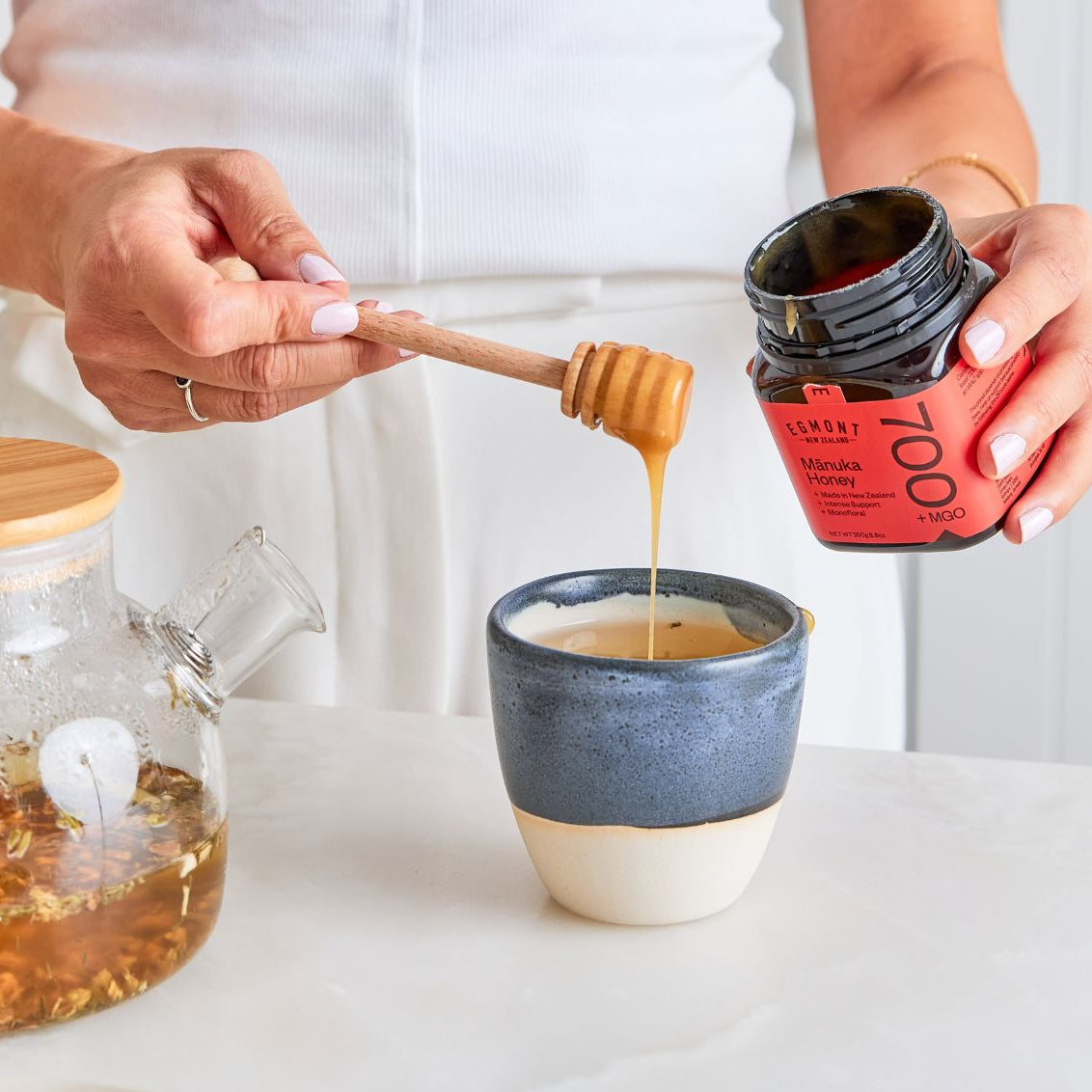
- Elevate: monofloral Mānuka with the UMF™ quality mark, richer and earthier. Lovely drizzled over yoghurt or stirred into warm drinks.
- Intense: our high-grade Mānuka with high antibacterial activity, made for the times you need extra support. Best enjoyed straight from the spoon.
- Ultra: our rarest, highest-grade Mānuka, with a deep, bittersweet toffee flavour.
Not sure which grade is for you? Take our grade quiz or see our MGO vs UMF comparison table.
The texture of honey is a pretty fascinating aspect of this natural, living product. Terms like 'creamed' and 'crystallised' are often associated with honey - but it's important to note that creamed doesn’t mean it’s no longer raw or natural, while crystallisation doesn't mean it’s gone bad. So are you ready to try our velvety table honey or dense, rich Mānuka Honey for yourself?
Frequently asked questions
Is crystallised honey safe to eat? Yes, completely. It's the same honey in a different texture.
Does crystallisation mean my honey isn't pure? Quite the opposite. Raw, unpasteurised honey crystallises naturally over time.
Why is one jar runny and another set? It comes down to the flowers the honey came from and how it's been stored. Two jars kept in different places can look very different.
Will softening my honey affect its MGO? Gentle warmth is fine. Just avoid high heat, especially with high-grade Mānuka.
My honey has a white layer on top. What is it? That's usually tiny air bubbles and fine crystals rising to the surface, sometimes called frosting. It's completely natural and safe to eat.
Is Egmont Manuka Honey raw and unpasteurised? All our honey is raw and 100% unpasteurised. Pasteurisation is a common industrial practice used to kill any potential harmful microorganisms or yeast in food products, including honey.
Nothing to hide; nothing but nature. Explore the full range.