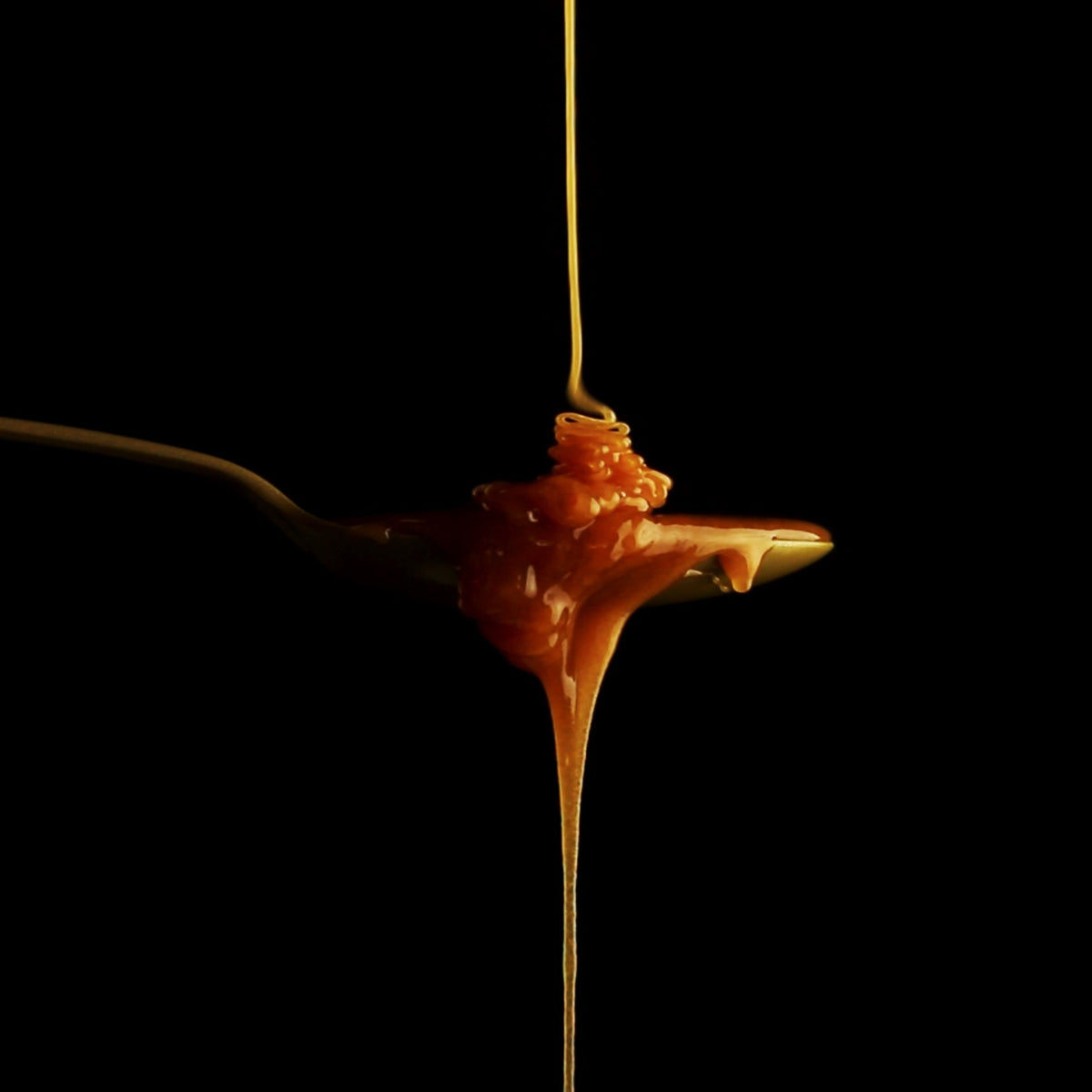

Mānuka Honey is a rare honey made by bees that forage on the flowers of the Mānuka tree (Leptospermum scoparium), which grows wild in New Zealand. The tree flowers for only a few weeks each year, so genuine Mānuka is harvested in small windows and in remote places. That's what gives it its rich, earthy taste and its value. At Egmont, our bees forage the native bush of South Taranaki, and every batch is independently tested before it reaches your jar.
Where does Mānuka Honey come from?
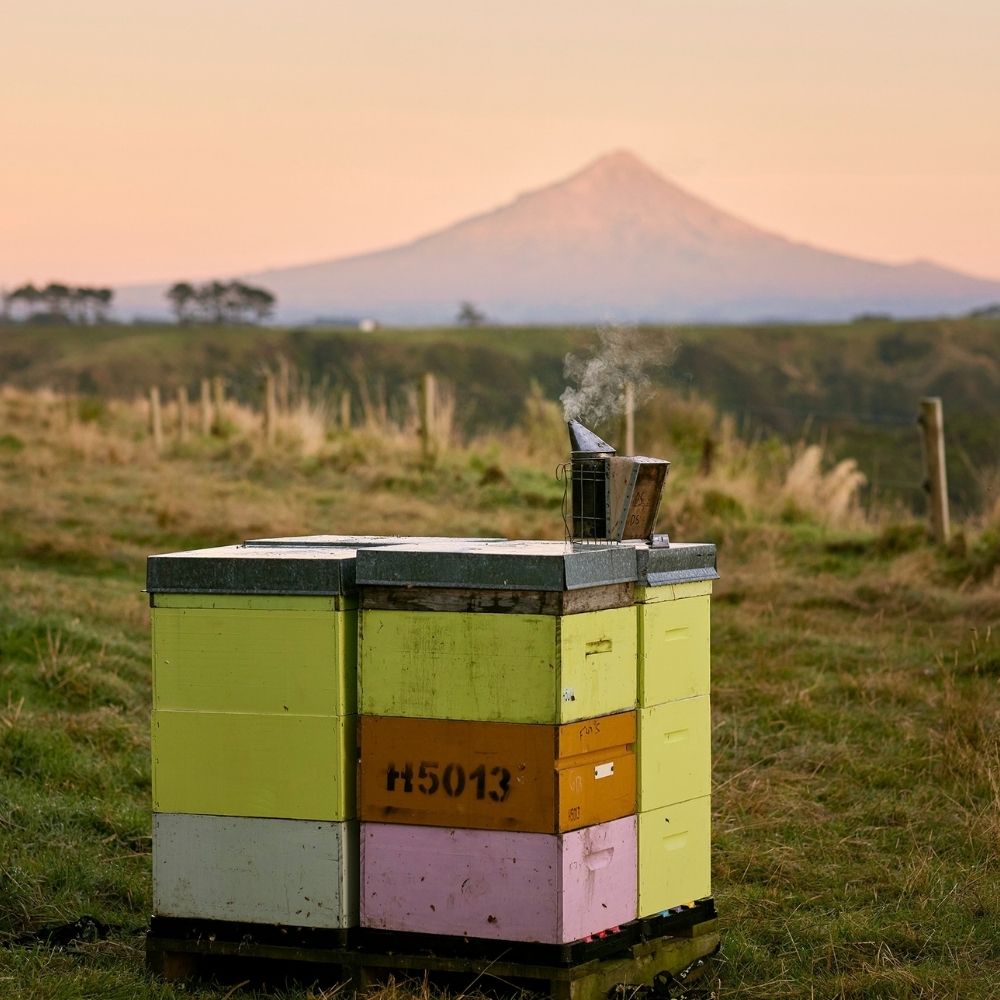
Genuine Mānuka honey comes from New Zealand, where the Mānuka tree is native. It grows across hillsides, river valleys and native forest, often in places that are hard to reach. Beekeepers move hives to the flowering sites each season, sometimes by helicopter, so the bees can work the blossom at its peak. Our hives mainly sit in the remote native bush of south Taranaki.
What does MGO mean on Mānuka Honey?
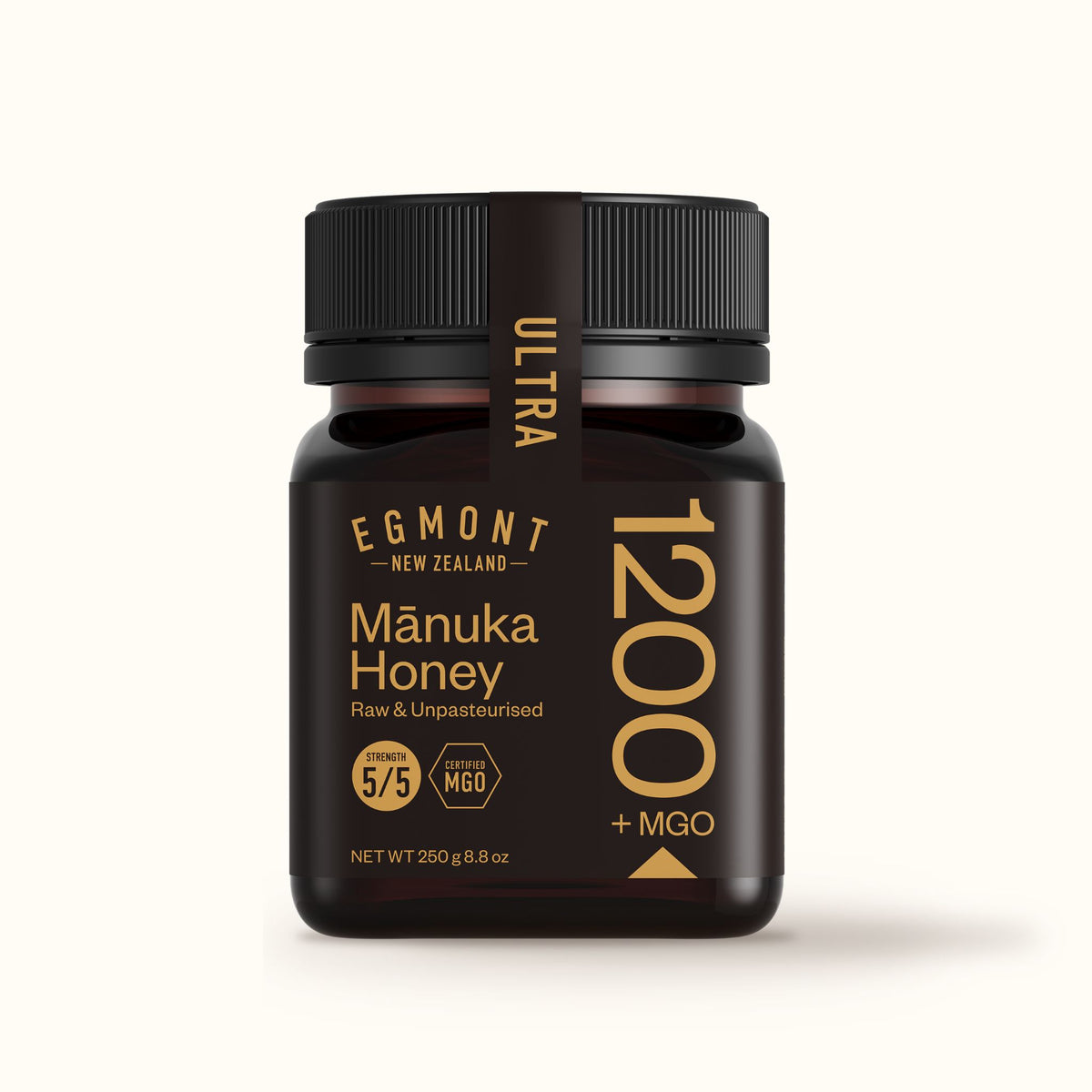
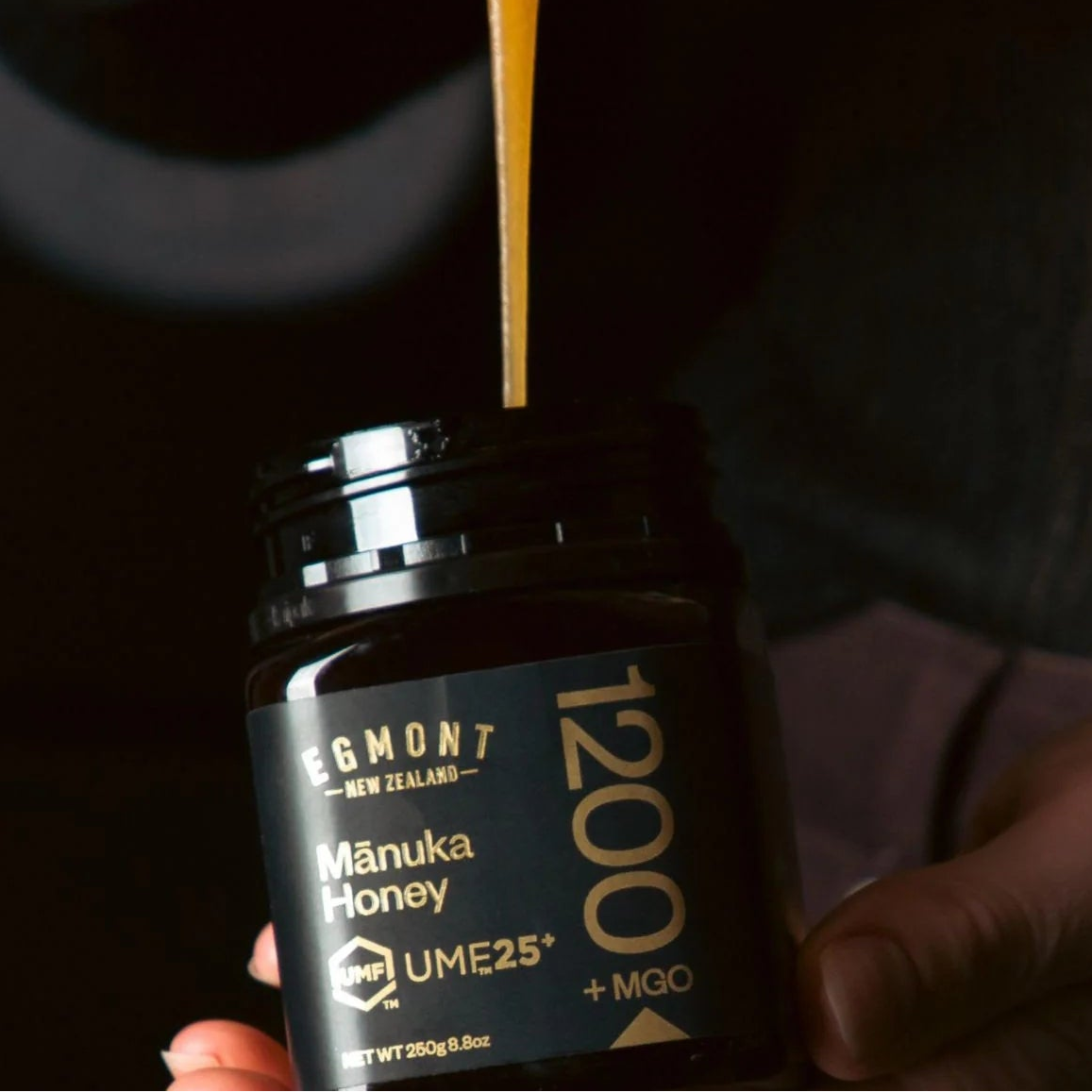
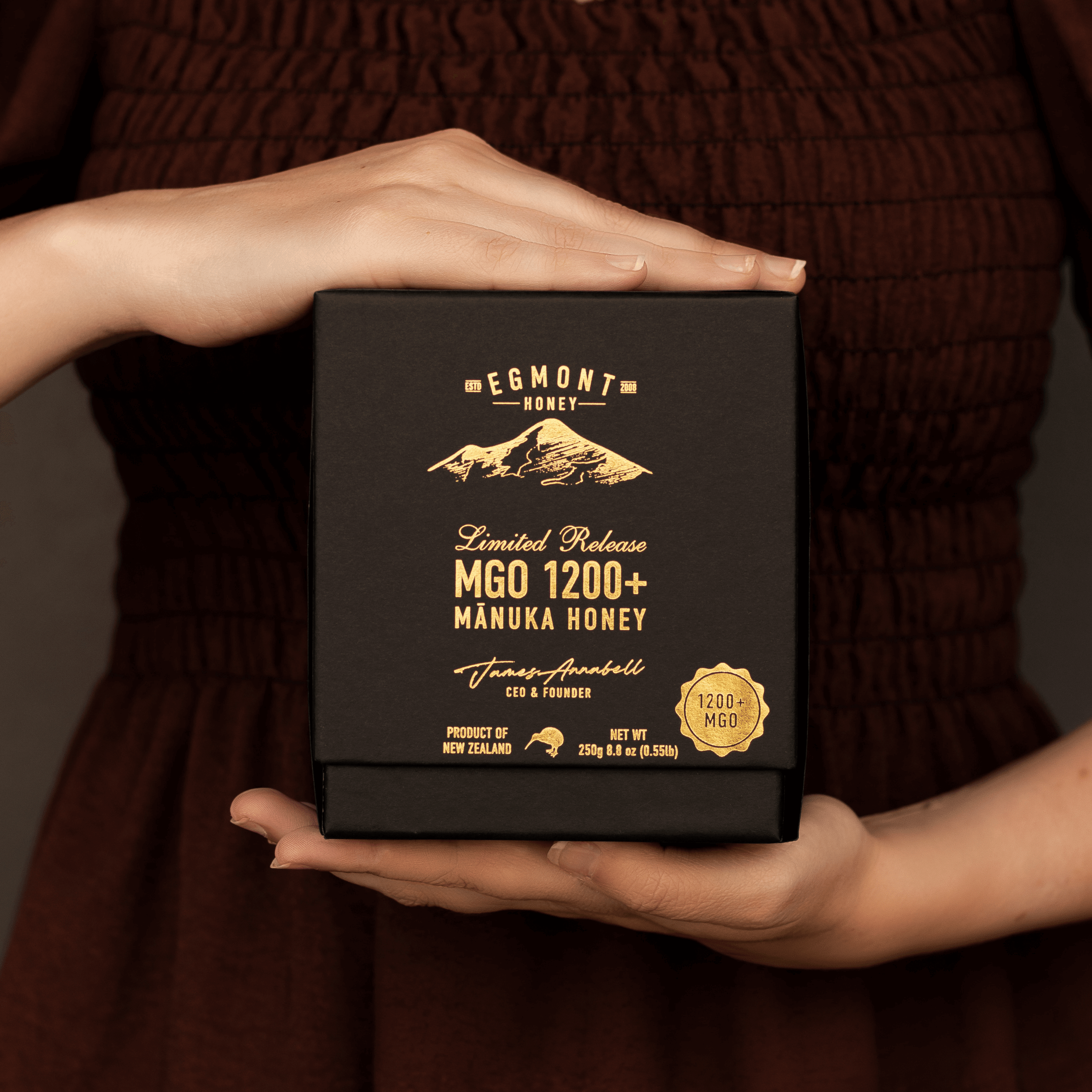
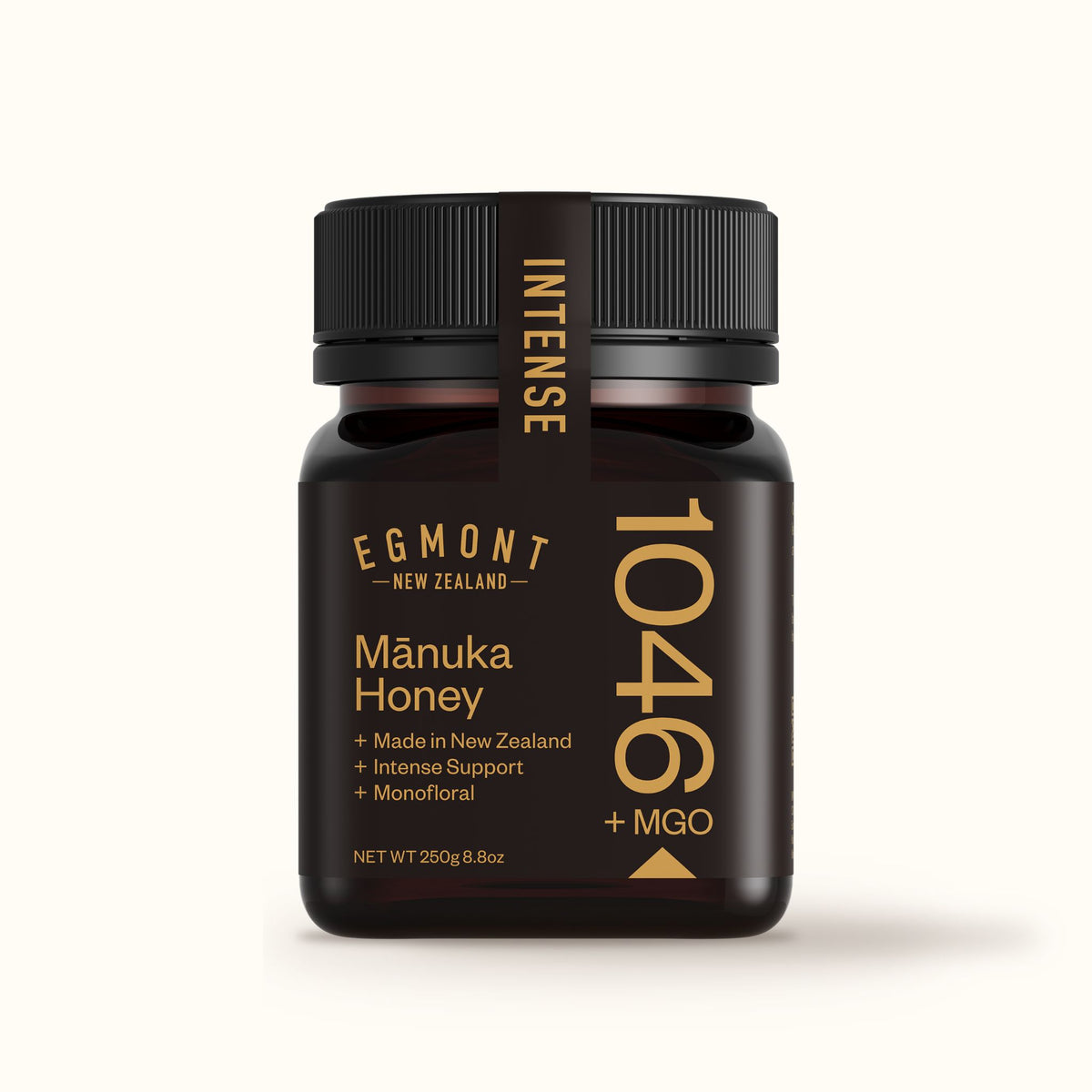
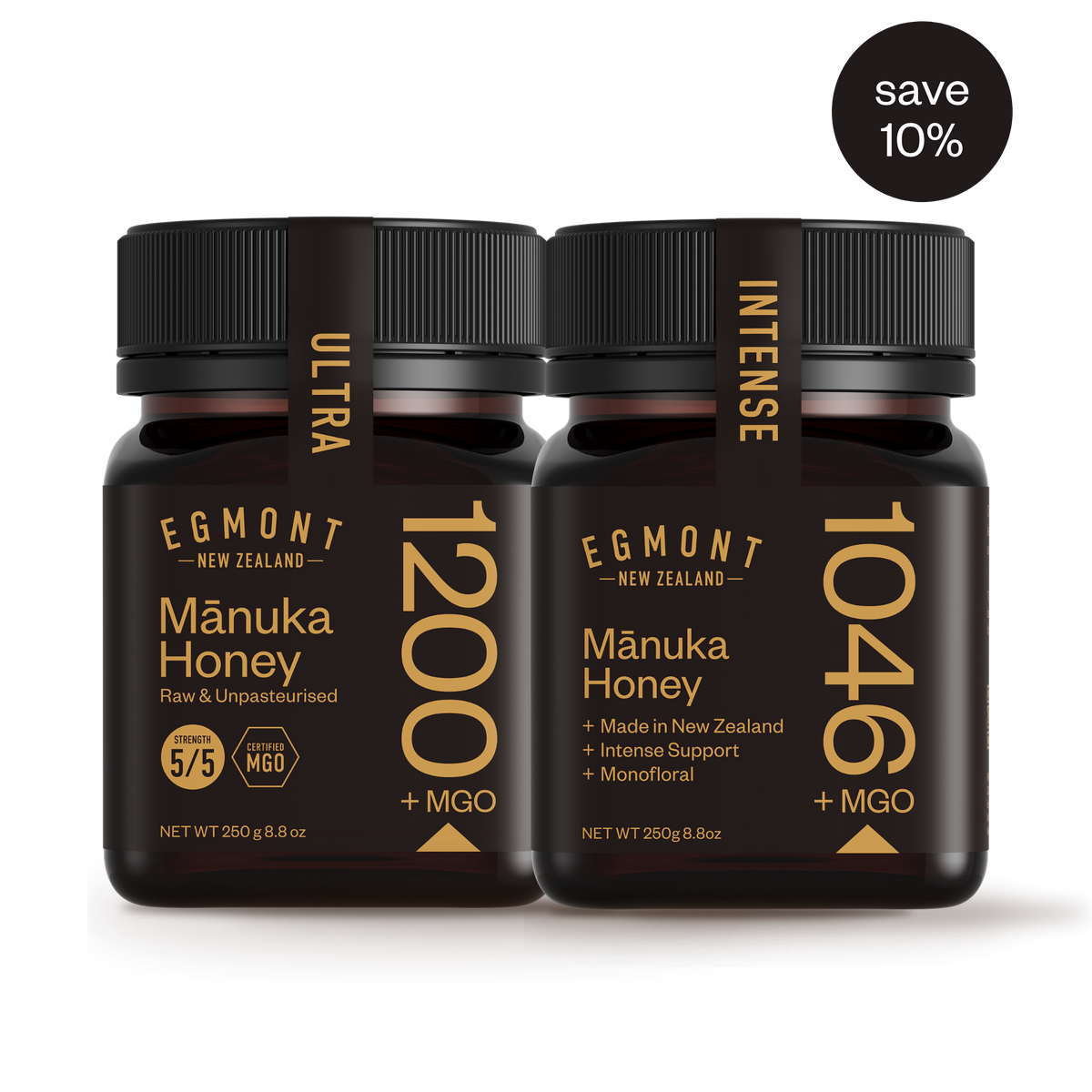
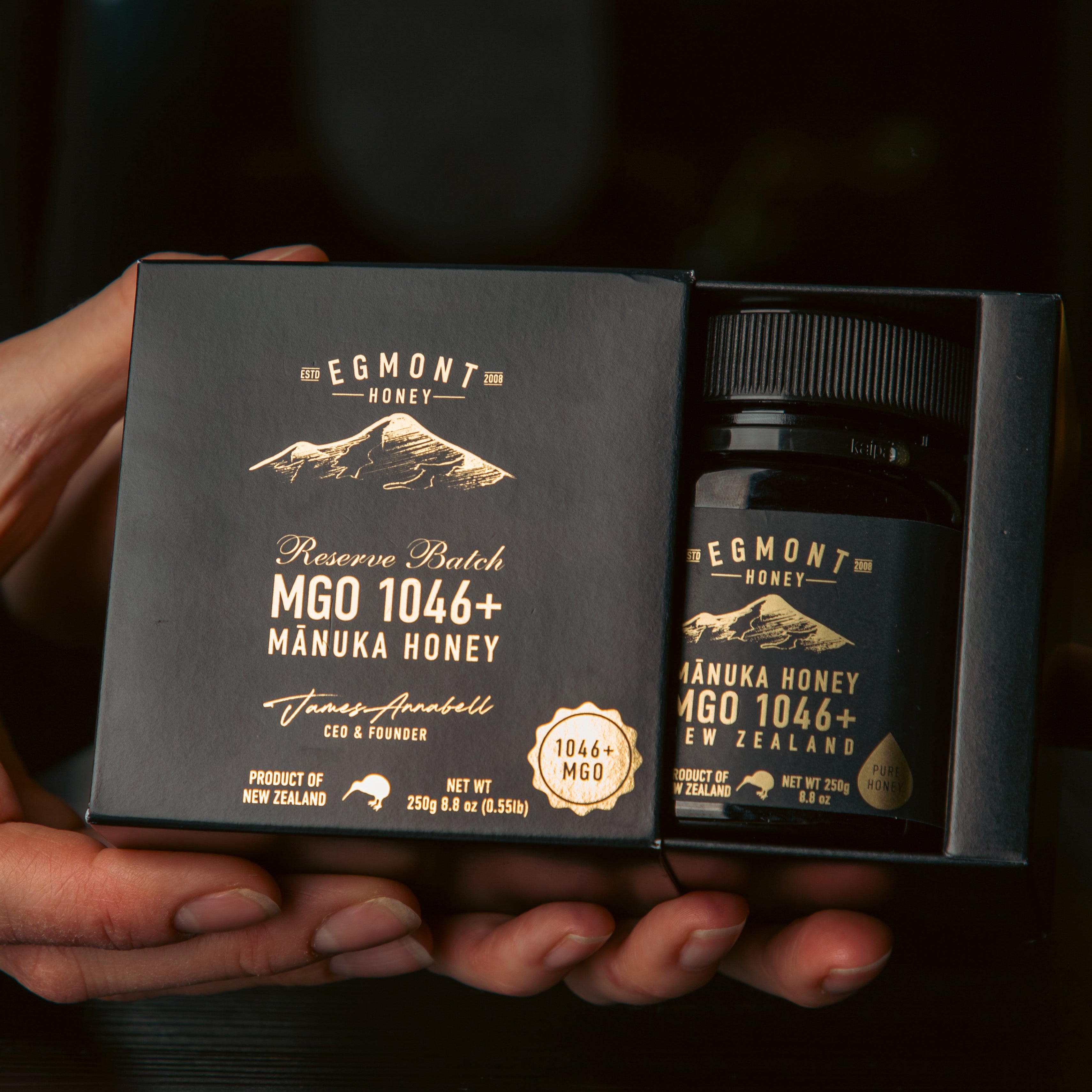
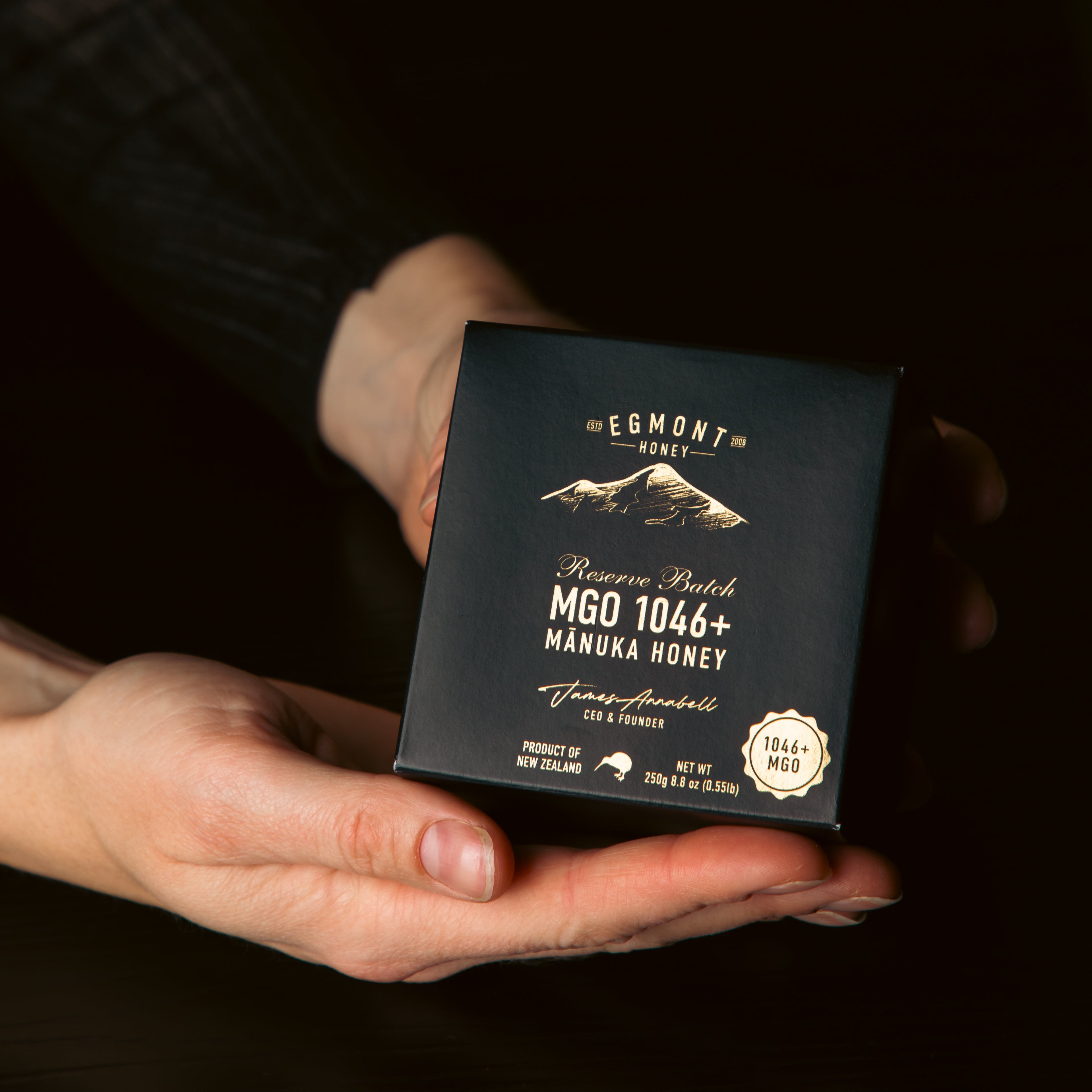
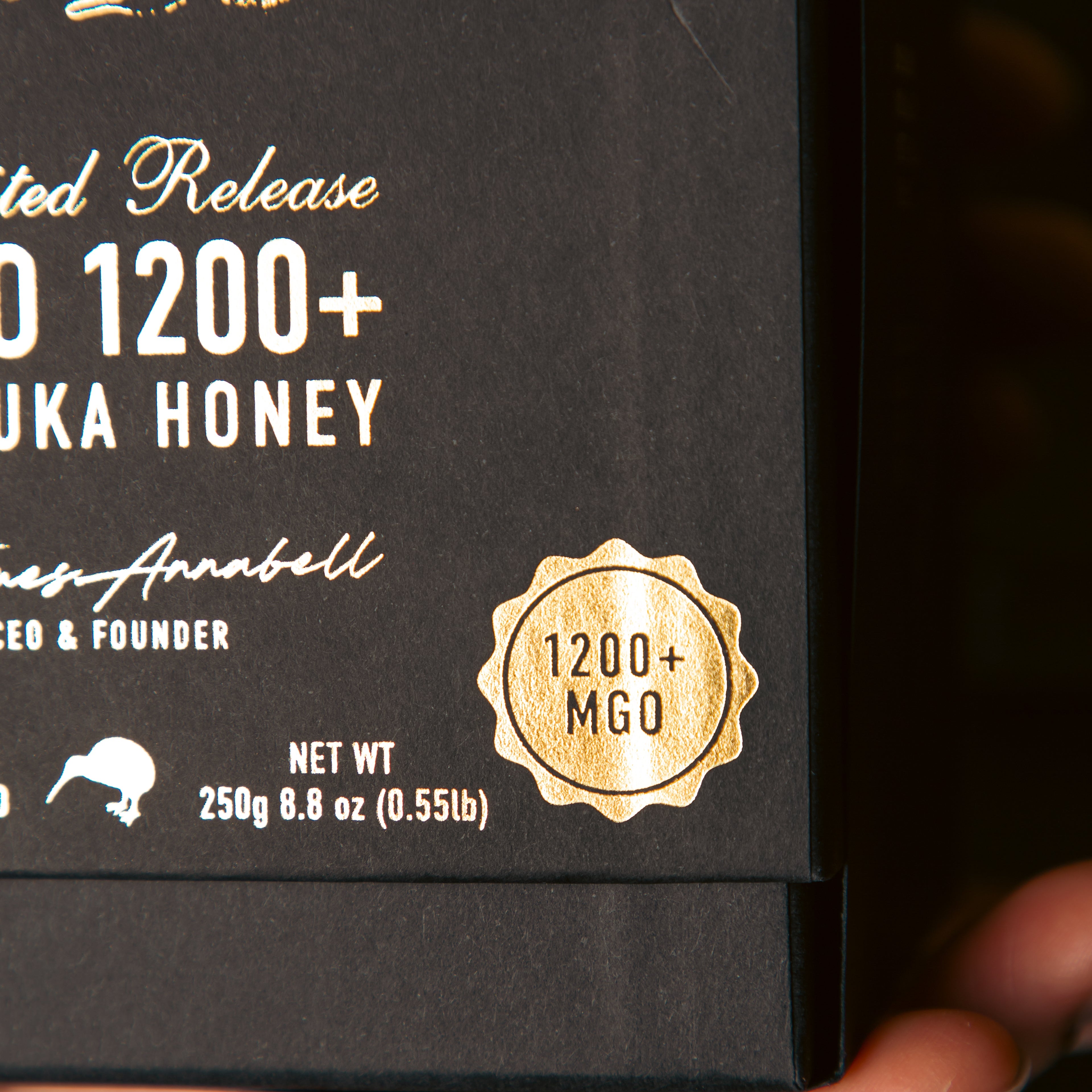
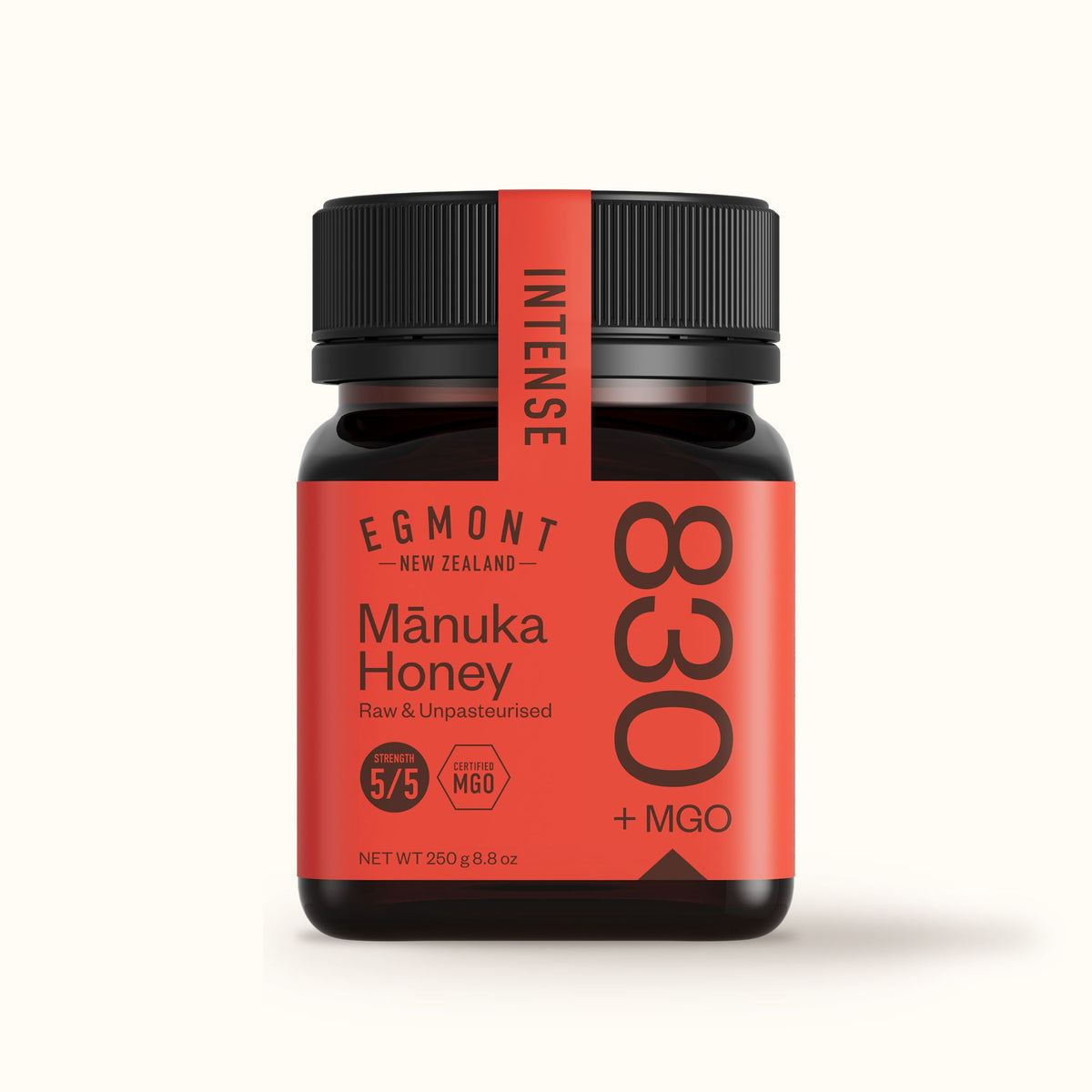
MGO stands for methylglyoxal, a naturally occurring compound found in high levels in Mānuka Honey. The number on the jar, such as MGO 265+ or MGO 830+, shows the minimum amount of methylglyoxal measured in that honey, in milligrams per kilogram. The higher the number, the higher the grade, and the rarer and richer the honey. Every Egmont batch is independently tested, and the MGO result is printed on the label.
What is UMF™ Mānuka Honey?
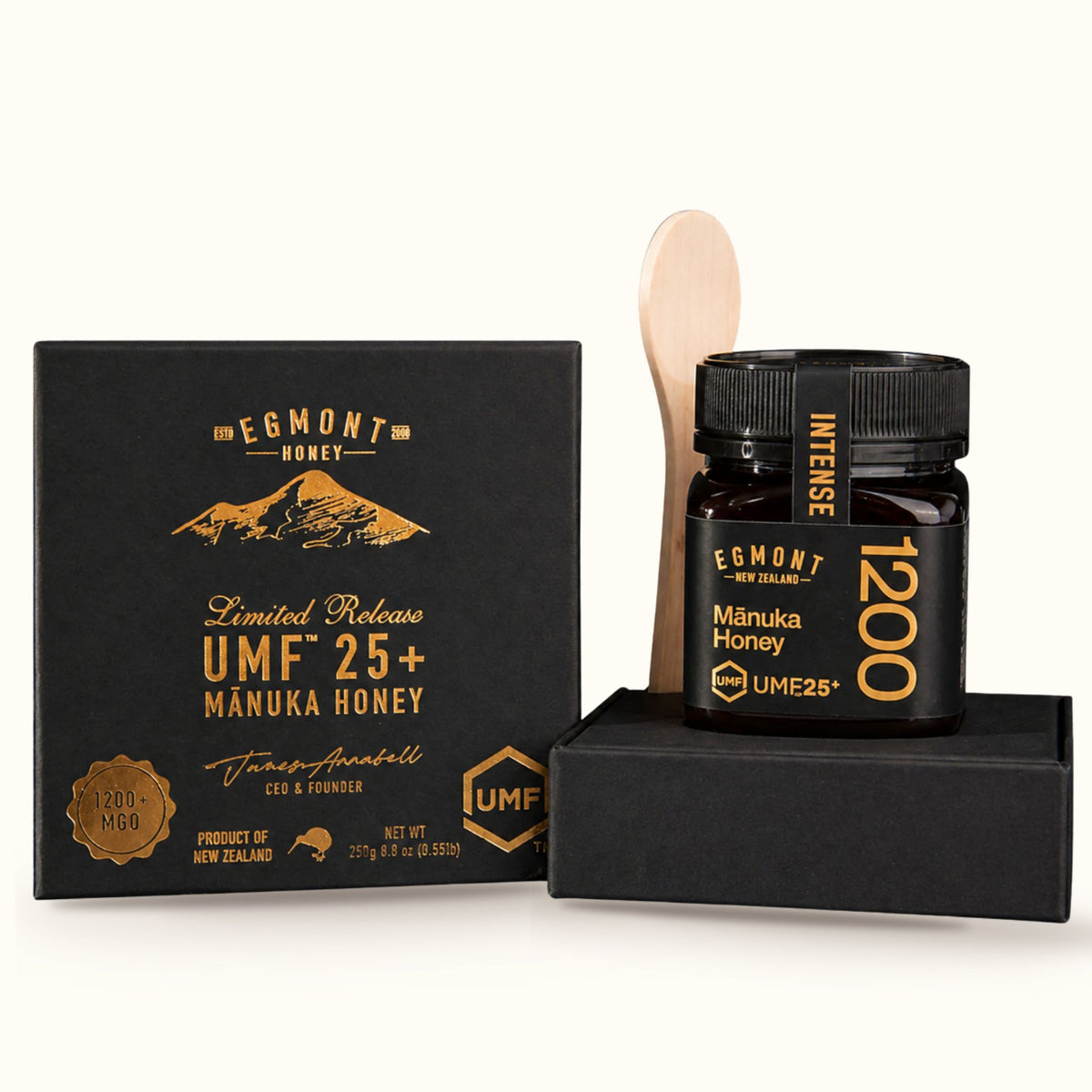
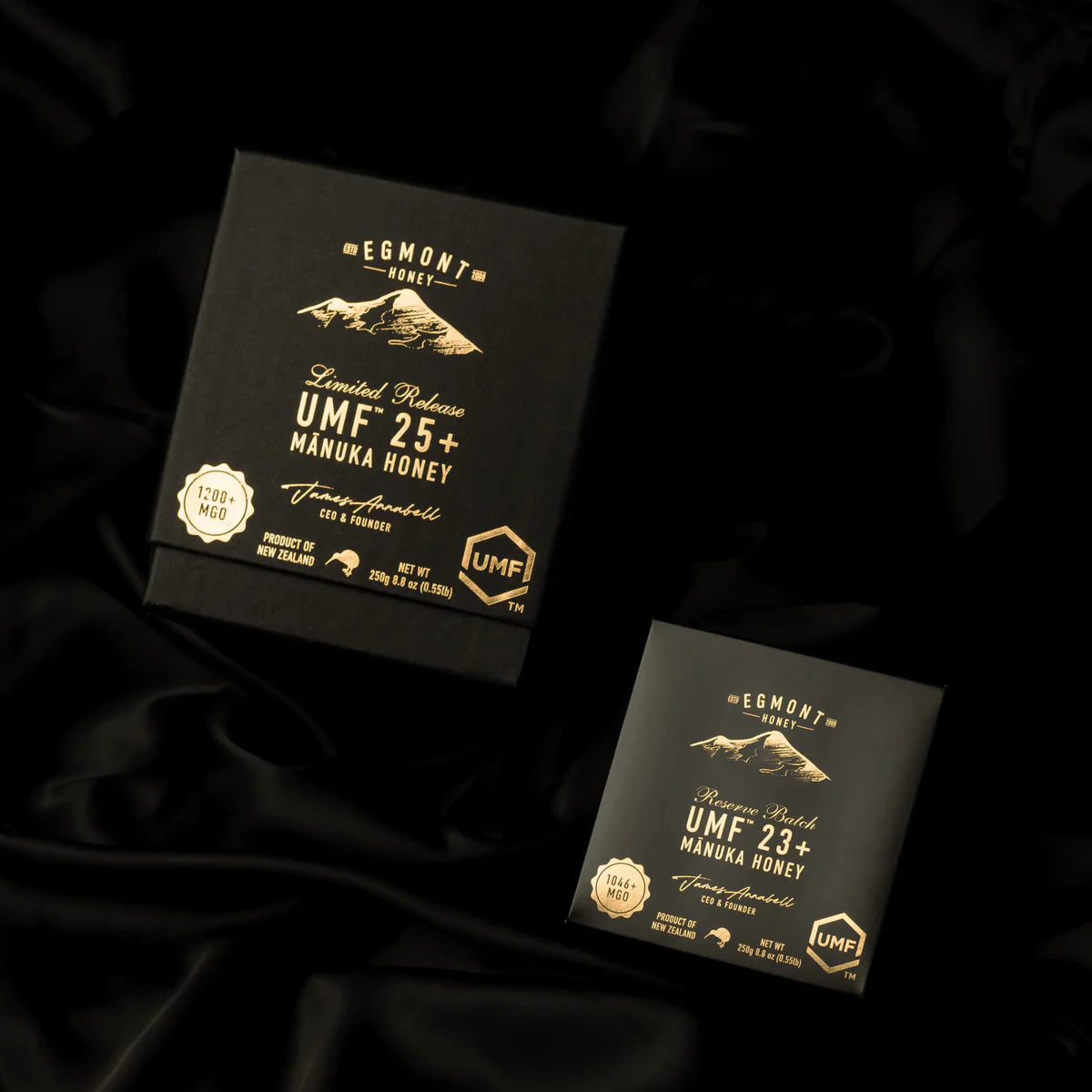
UMF™, or Unique Mānuka Factor, is an independent grading system run by the UMF™ Honey Association in New Zealand. Rather than measuring one compound, it tests several natural markers, including MGO, to confirm the honey is authentic and pure. UMF™ 10+ is roughly equivalent to MGO 265+, and UMF™ 20+ to MGO 830+. Our UMF™ range is licensed and certified by the Association.
Monofloral vs Multifloral Mānuka Honey
New Zealand's Ministry for Primary Industries (MPI) sets a scientific definition for Mānuka honey, based on four chemical markers and one DNA marker from Mānuka pollen. Honey that meets the full standard is monofloral, meaning it comes mostly from Mānuka flowers. Multifloral Mānuka contains Mānuka alongside other native flowers. It's milder, lighter and ideal for cooking and baking.
Why is Mānuka Honey so expensive?
Several things limit how much Mānuka can be made. The tree flowers for only a few weeks a year, it grows in remote and often rugged places, and weather can cut a season short. Every batch then has to be tested and certified, and only a small share of each harvest reaches the higher grades. The higher the MGO, the rarer the honey, and the price reflects that.
Is Mānuka Honey raw?
Ours is. Egmont Mānuka honey is raw and unpasteurised, extracted and packed in our own factory in New Plymouth without high heat, so it keeps its natural character and creamy texture.
HOW TO USE
How to Maximise Your Mānuka Honey
The benefits of the Mānuka Honey have been celebrated for centuries. It contains over 2,200 bioactive compounds that give natural antibacterial and anti-inflammatory properties. Here are some of the best ways to enjoy yours.
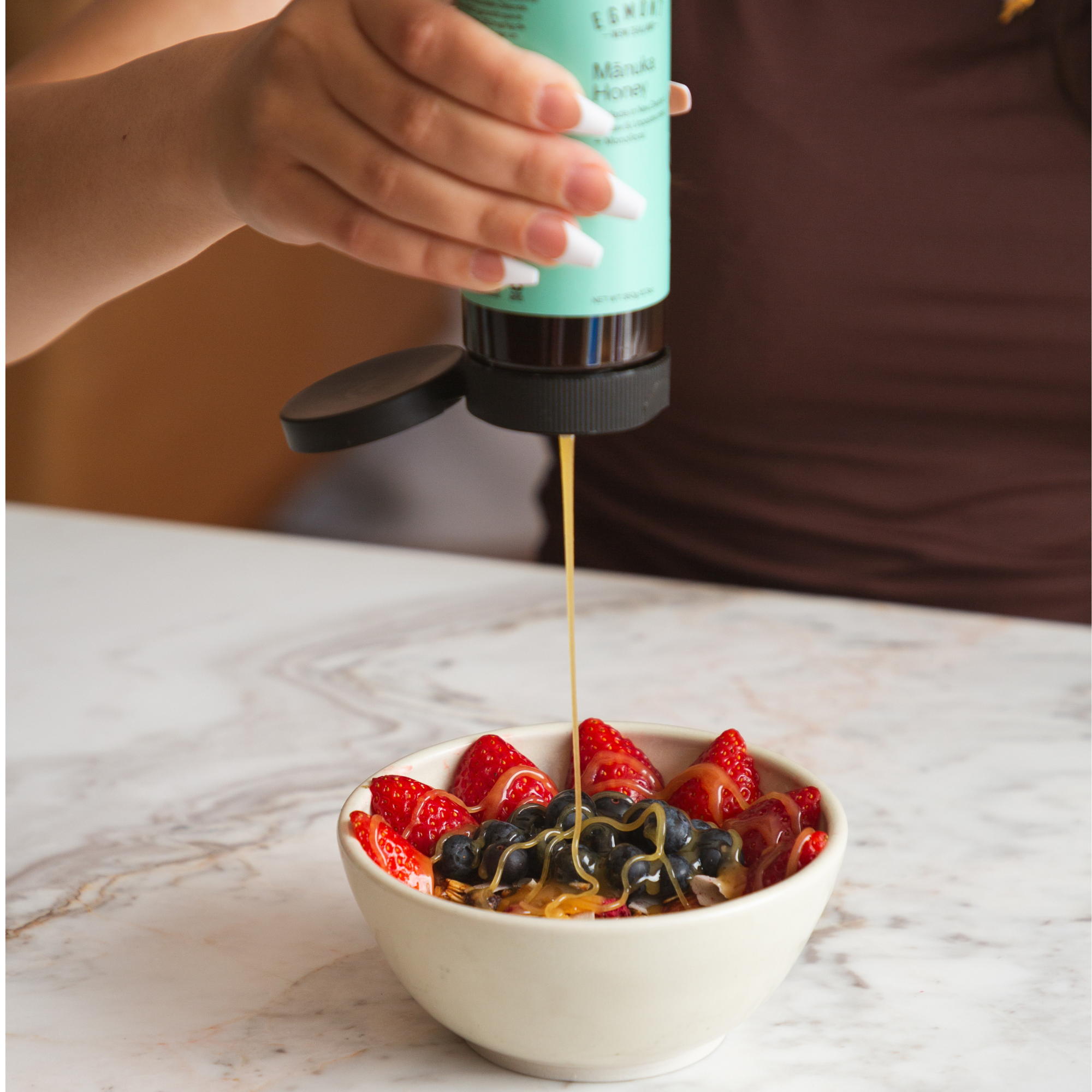
Add it in smoothies or drizzle on cereal
Mānuka Honey can be blended into your favourite smoothie or added to your daily breakfast to give a natural sweetness.
View our recipe section for inspiration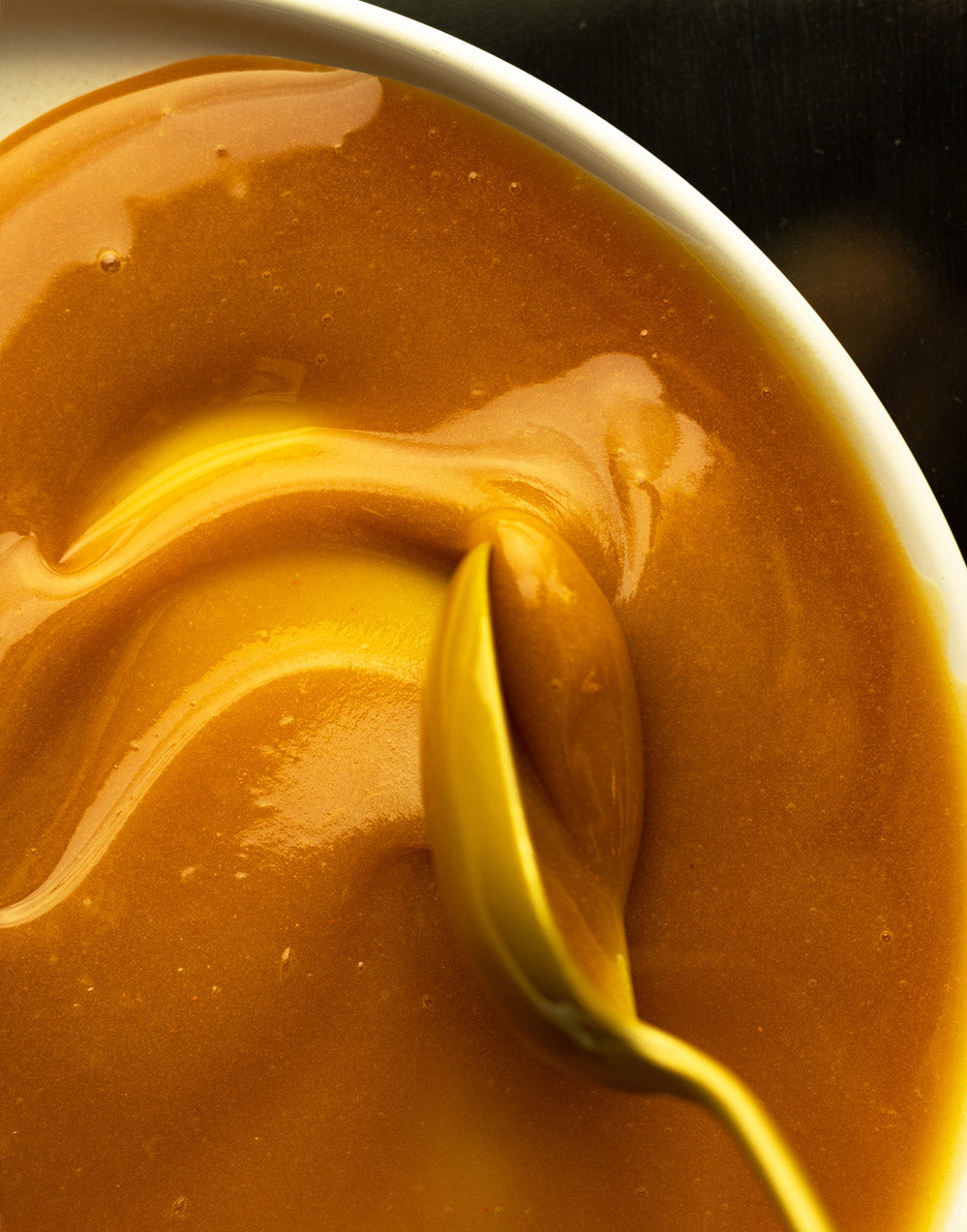
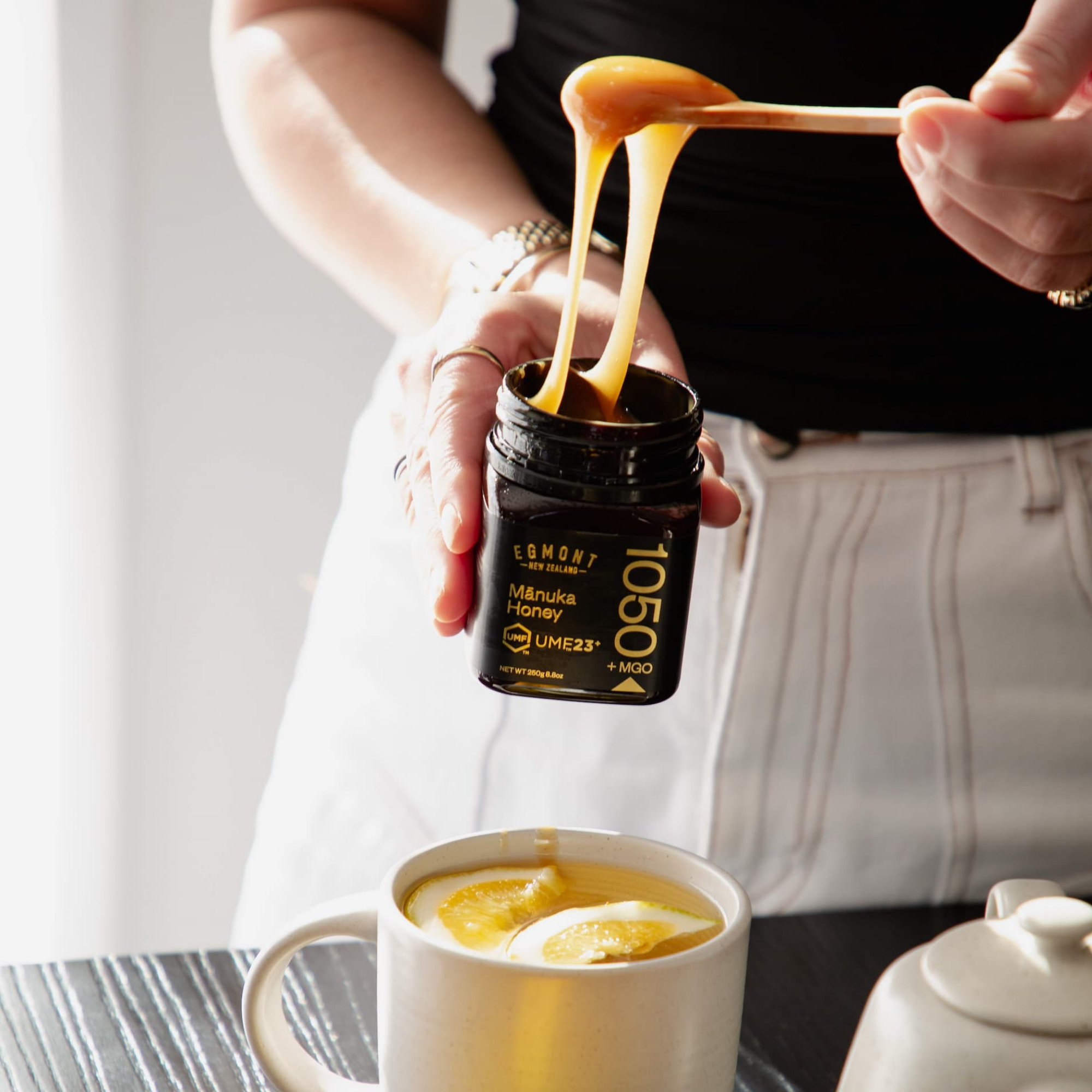
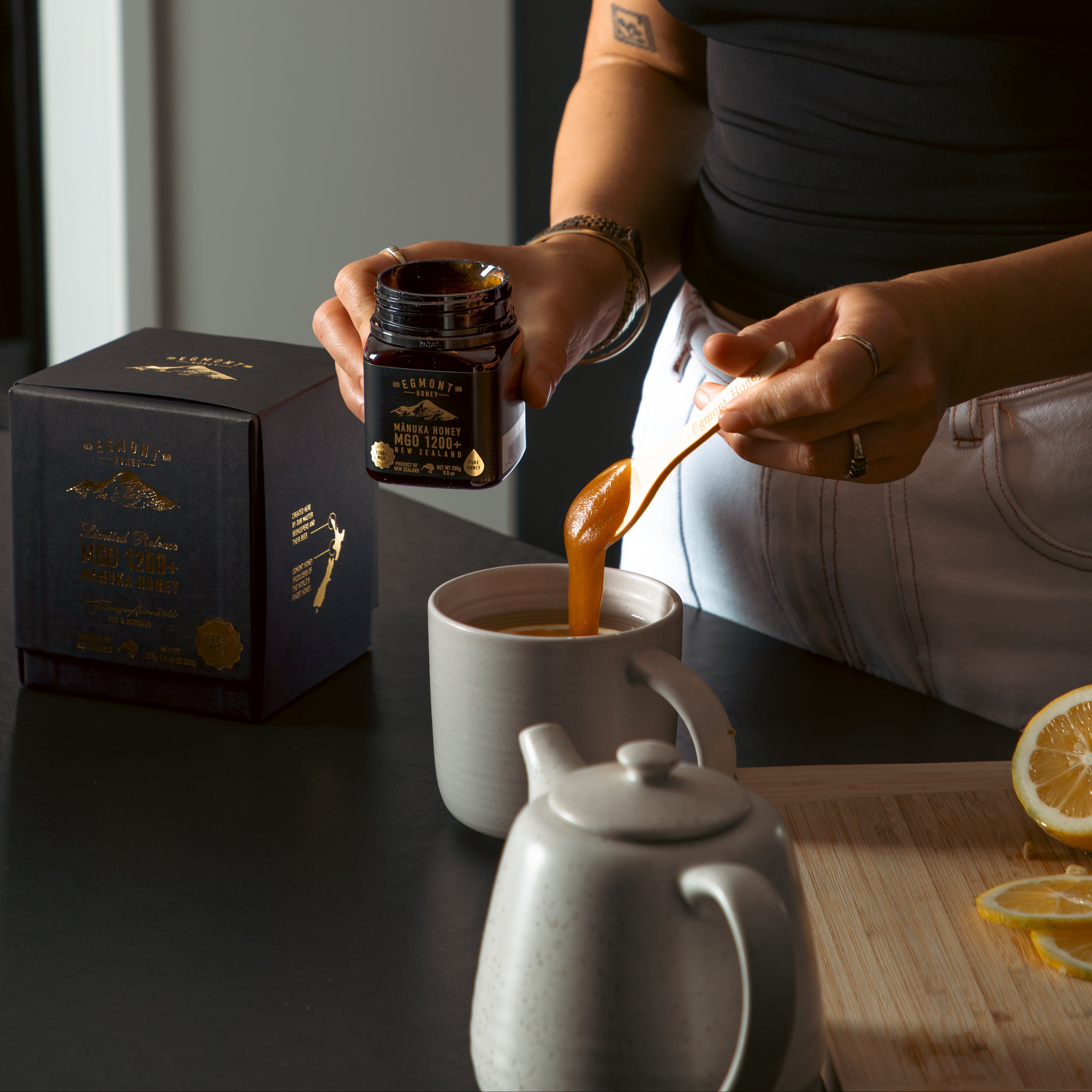
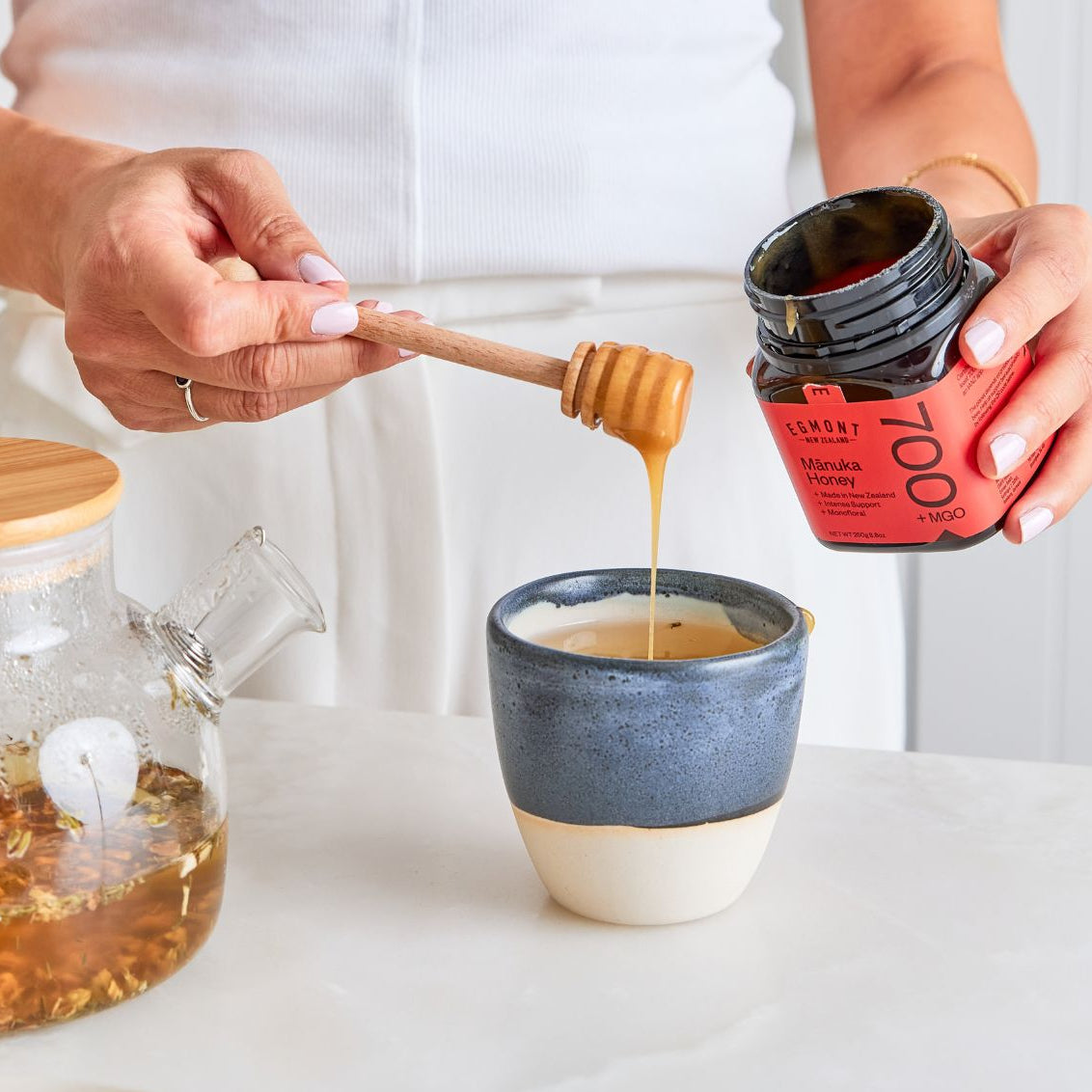
Mix Mānuka Honey into a warm drink
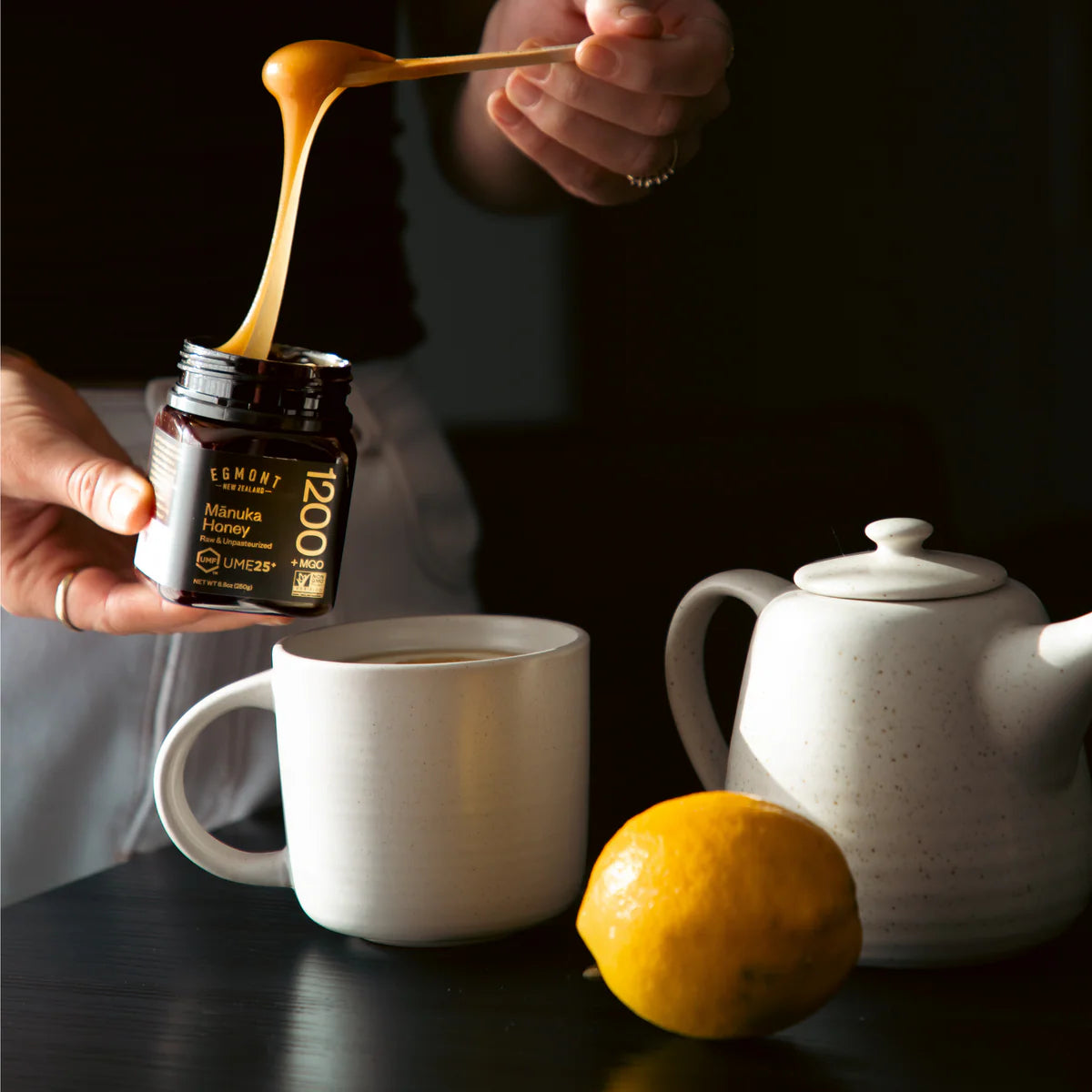
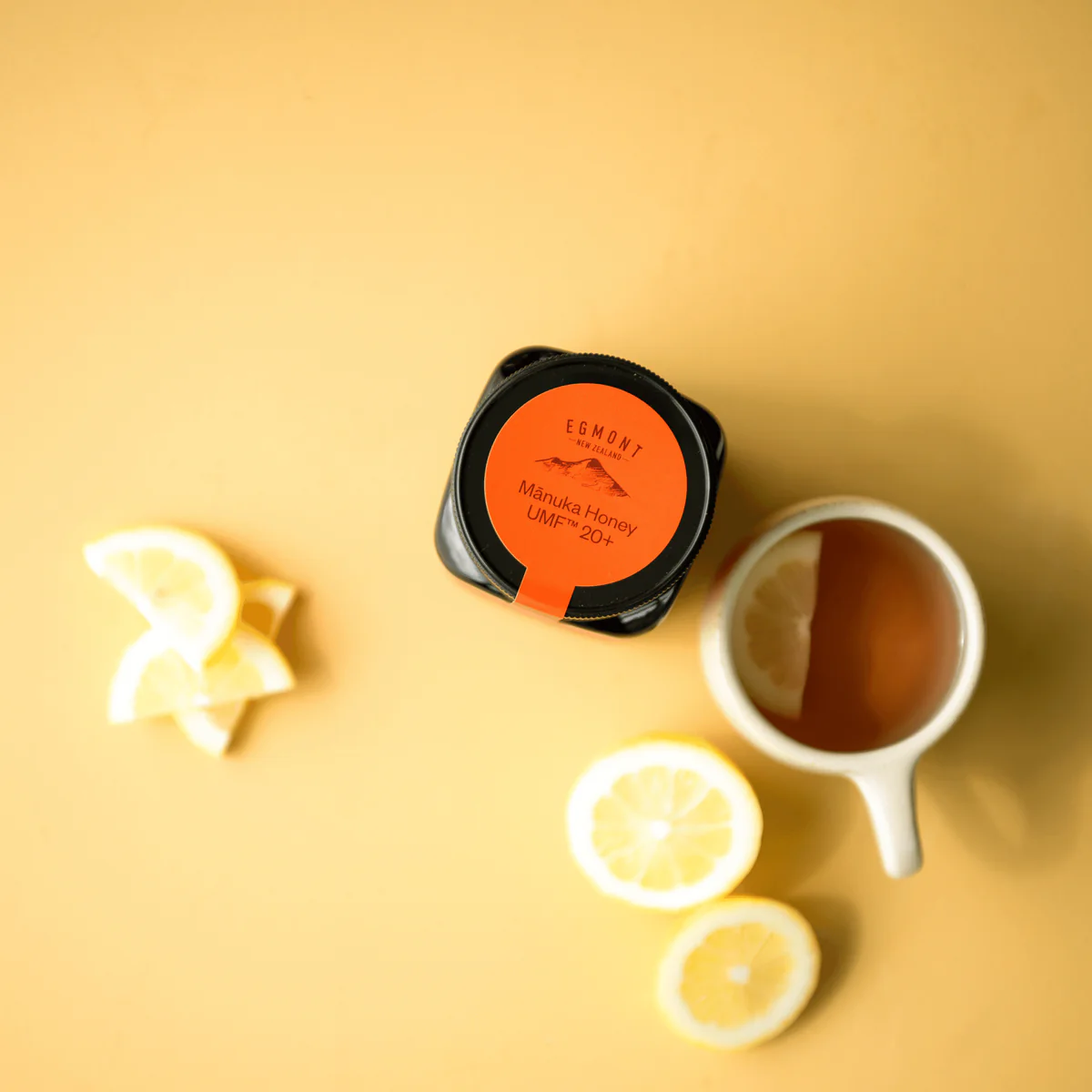
Egmont Mānuka Honey can be mixed with warm water and lemon to create a soothing tonic. Ensure you only add it to warm, not boiling water.
Shop our Elevate range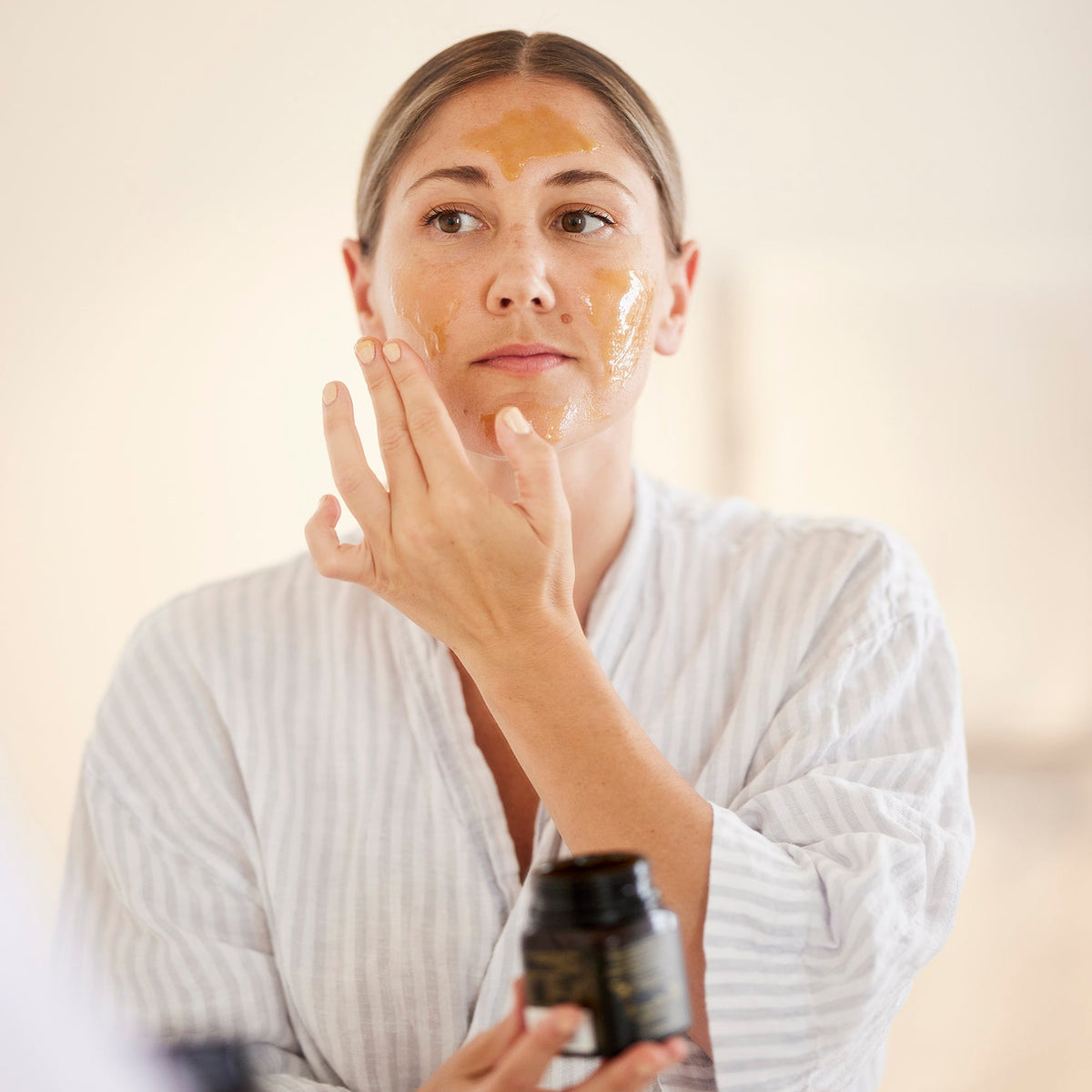
Apply to your skin as a natural cleanser
Mānuka Honey can be used to keep skin moisturised and glowing. Simply spread as an even layer across your face for a DIY facemask or as a natural cleanser.
Shop our Intense range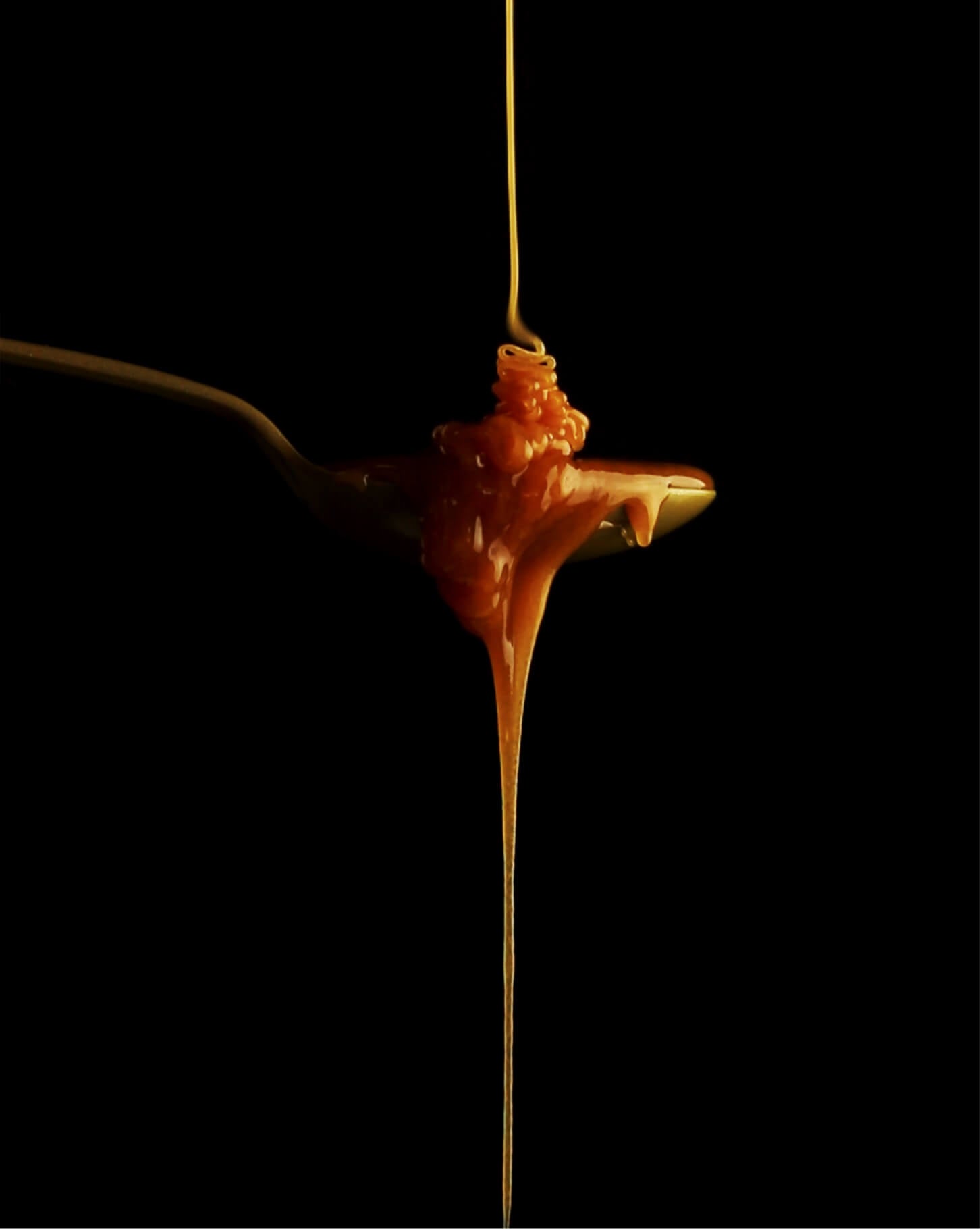
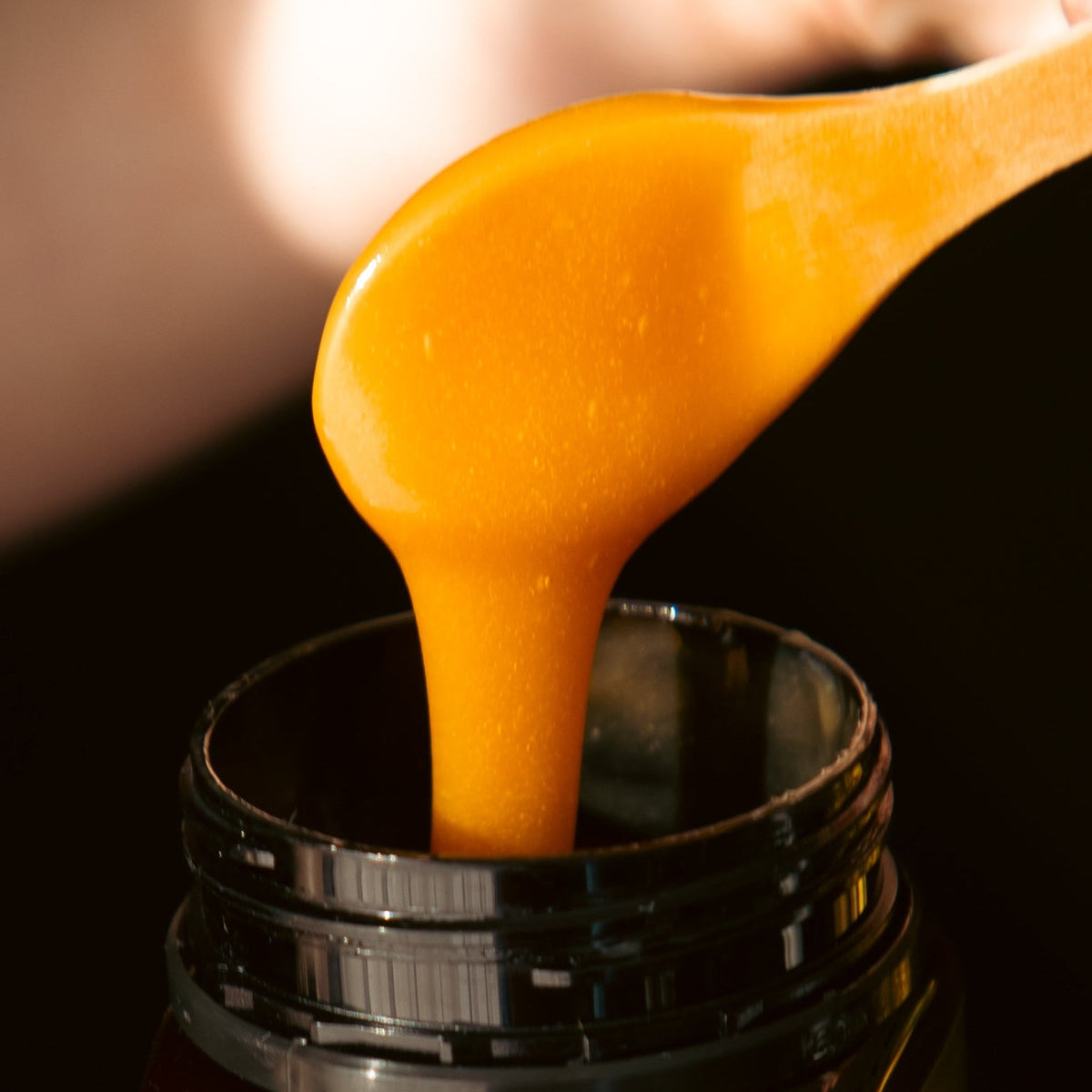
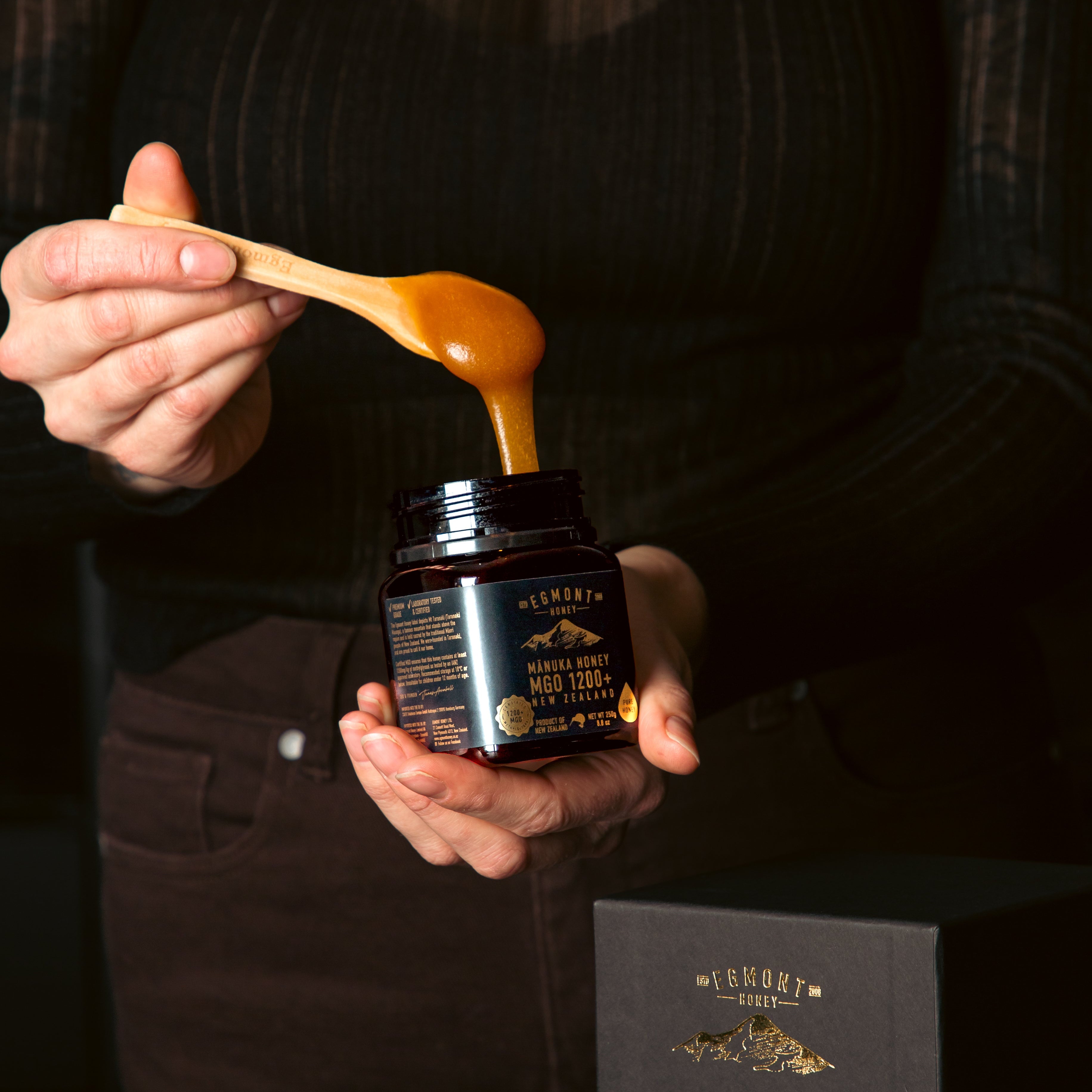
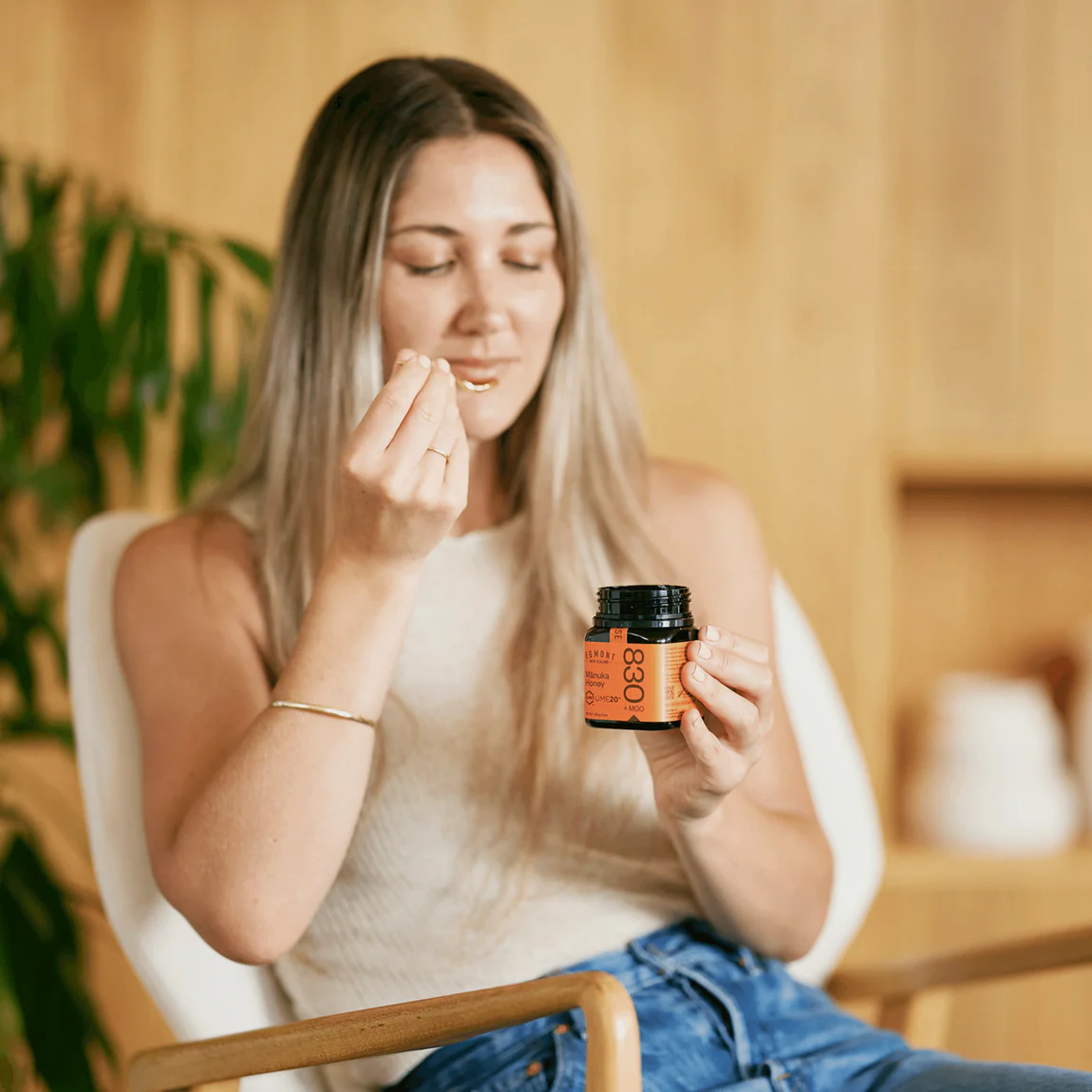
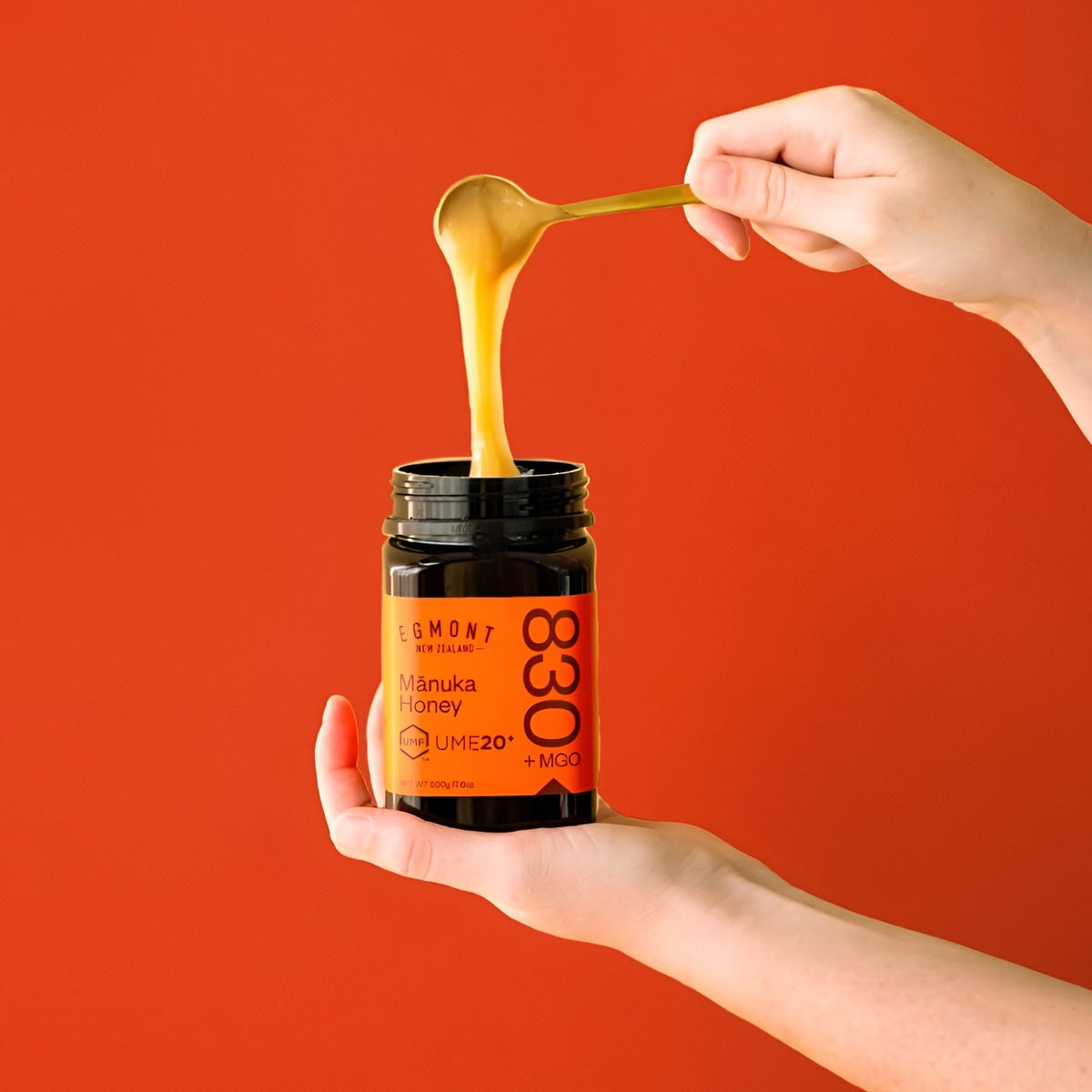
Enjoy it straight from the spoon
The potency of your Manuka Honey will depend on the MGO rating – the higher the grade, the stronger your honey. We recommend enjoying the higher grades by the spoonful.
Shop our Ultra Range