


Mānuka Honey for Gut Health: Benefits, Science & How to Use It Daily
When people think about Mānuka honey, they often focus on its rich flavour or its reputation as a premium natural product. But beyond taste, there’s growing scientific interest in how honey—especially high-quality varieties like Mānuka—may support your gut health.
So what does the research actually say? And how can something as simple as honey play a role in your digestive system?
Why Gut Health Matters
Your gut is home to trillions of bacteria—often called the gut microbiome. Some of these bacteria are beneficial, helping with digestion, nutrient absorption, and overall wellbeing. Others can be less helpful if they grow out of balance. Keeping the right balance is key. Scientists often talk about two important concepts:
- Probiotics: the “good” bacteria (like Lactobacillus and Bifidobacterium)
Prebiotics: the food that feeds those good bacteria
Together, they help support a healthy digestive system.
Where Honey Fits In
Here’s where things get interesting.
Honey isn’t just a natural sweetener—it also contains special carbohydrates called oligosaccharides. These are a type of sugar that your body doesn’t fully digest, meaning they travel to your gut where beneficial bacteria can use them as fuel.
In simple terms: Honey can act as a natural prebiotic—helping feed the good bacteria in your gut.
Feeding the Good Bacteria
Research shows that these oligosaccharides in honey can support the growth of beneficial bacteria like:
- Lactobacillus
- Bifidobacterium
These are the same types of bacteria often found in probiotic foods like yoghurt. When these bacteria thrive, they produce compounds like short-chain fatty acids (SCFAs), which are linked to:
- Supporting digestion
- Helping maintain a balanced gut environment
- Contributing to overall metabolic function
Think of it like this: Honey helps “feed the good guys” in your gut.
A Unique Advantage: More Than Just Prebiotic
What makes honey particularly interesting is that it doesn’t just feed beneficial bacteria—it also has natural antibacterial properties.
Honey contains components like:
- Natural acidity
- Hydrogen peroxide
- Unique compounds (like methylglyoxal in Mānuka honey)
These contribute to its well-known antimicrobial activity. The exciting part?
Research suggests honey may support beneficial bacteria while helping limit less desirable microbes—a powerful combination.
The Power of Synergy
Scientists are now exploring how honey works alongside probiotics in what’s called a “synbiotic” effect—where prebiotics and probiotics work together.
Some studies have shown that when honey is combined with probiotic strains:
- Growth of beneficial bacteria improves
- Harmful bacteria may be inhibited
- Overall gut balance may be supported
For example, Mānuka honey has been shown in lab studies to support probiotic growth while limiting certain pathogens.
While more human research is still needed, the early findings are promising.
How Mānuka Honey Stands Out
Not all honey is created equal.
Mānuka honey, sourced from the native forests of New Zealand, contains unique compounds that set it apart—particularly its non-peroxide antibacterial activity, often measured by UMF™ or MGO levels.
These naturally occurring compounds contribute to:
- Its stability over time
- Its distinctive properties compared to standard honey
- Its growing interest in scientific research
This is why Mānuka honey continues to attract attention not just as a food—but as a functional ingredient.
What This Means for Everyday Use
So how can you actually use this in your routine?
While honey isn’t a replacement for a balanced diet, it can be a simple way to support your daily habits.
Try:
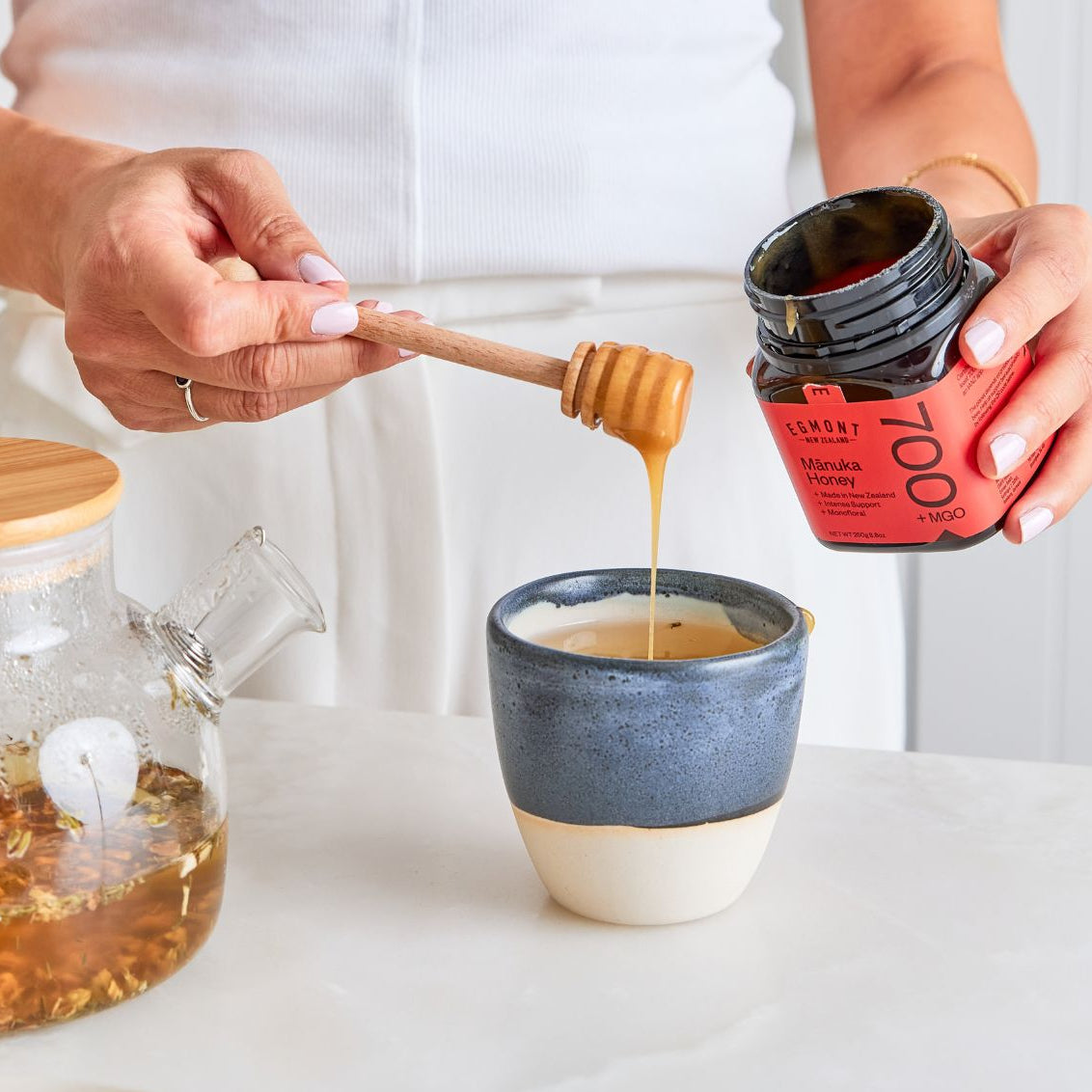
- Adding a spoonful to warm water or tea
- Drizzling over oats or yoghurt (for a natural prebiotic + probiotic combo)
- Using it as a natural alternative to refined sugar
For higher-grade Mānuka honey, many people prefer enjoying it straight from the spoon as part of a daily ritual.
The Bottom Line
The science is still evolving, but here’s what we know so far:
- Honey contains natural compounds that can feed beneficial gut bacteria
- It may help support a balanced gut environment
- Mānuka honey offers unique properties that set it apart
Early research suggests a powerful synergy between honey and probiotics
As research continues, honey is increasingly being recognised not just as a sweetener—but as part of a broader conversation around functional, natural nutrition.
Note: Research in this area is ongoing. Findings are based on laboratory and early-stage studies and are not intended as medical claims.
References: Alvarez-Suarez, J.M., et al. (2016). Contribution of honey in nutrition and human health: a review. Sanz, M.L., et al. (2005). Oligosaccharides in honey as potential prebiotics. Roberfroid, M. (2007). Prebiotics: the concept revisited. Gibson, G.R., & Roberfroid, M.B. (1995). Dietary modulation of the human colonic microbiota. Eteraf-Oskouei, T., & Najafi, M. (2013). Traditional and modern uses of natural honey in human diseases. Kwakman, P.H.S., & Zaat, S.A.J. (2012). Antibacterial components of honey. Mandal, M.D., & Mandal, S. (2011). Honey: its medicinal property and antibacterial activity. Alvarez-Suarez, J.M., et al. (2010). The composition and biological activity of honey. Rao, P.V., et al. (2019). Honey as a potential natural prebiotic. Mohammed, M.E.A., et al. (2019). Manuka honey enhances probiotic growth and inhibits pathogens.